
Best Tech for a Cruise of 2026
Maximize your time at sea with a curated selection of maritime-compliant power hubs, elite noise-canceling gear, and ruggedized cameras designed to survive salt spray, avoid security confiscation, and handle the unique electrical constraints of a modern cruise ship.
Introduction
Outfitting yourself for a cruise is a technical challenge that differs significantly from a standard hotel stay. Because ships operate on an "isolated terra" (IT) grounding system, standard household surge protectors are considered fire hazards and are strictly prohibited. Furthermore, you are entering a high-density environment where metal bulkheads act as Faraday cages, often killing cell signals and challenging even the best Starlink-backed shipboard Wi-Fi. Selecting the right gear isn't just about luxury; it's about maintaining connectivity and power within these rigid maritime constraints.
When selecting tech for the high seas, portability and ingress protection (IP ratings) are your highest priorities. From the salt-heavy air on your balcony to the splashing of the lido deck, your devices face constant environmental stressors. We've selected five products that solve these specific friction points, ensuring you spend less time troubleshooting your gear and more time enjoying your itinerary. These tools represent the gold standard in power management, acoustics, and durable documentation for the modern traveler.
Best Power Solution: Anker 525 Charging Station
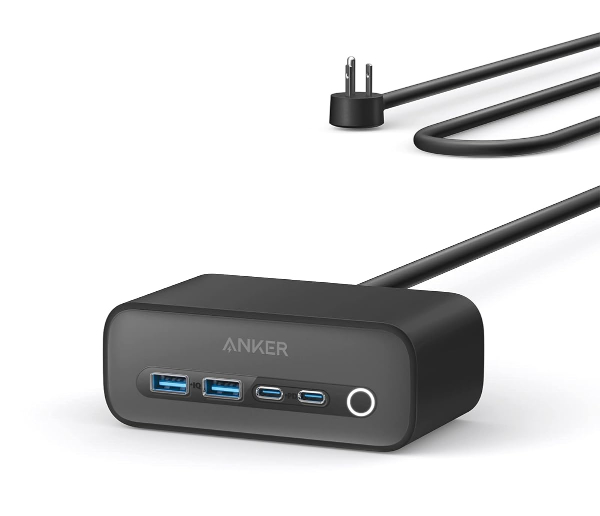
The Anker 525 is a masterclass in maritime power management. Its standout feature is that it is a "non-surge" power strip. Traditional surge protectors use Metal Oxide Varistors (MOVs) to shunt excess voltage to the ground wire, which can cause internal fires on a ship's unique electrical grid. The Anker 525 bypasses this risk, making it "cruise-compliant" and safe from confiscation at the terminal security checkpoint.
Technically, it utilizes Gallium Nitride (GaN) technology to deliver up to 67W of power. This allows the unit to charge a laptop, two phones, and a tablet simultaneously without overheating. The 5-foot extension cord is vital because cruise ship architects often place outlets in bizarre, hard-to-reach locations behind the desk or far from the nightstand. By moving the power hub to your bedside, you gain immediate access to three AC outlets and four USB ports (2 USB-C, 2 USB-A).
The only real limitation is that while it is safer for the ship, it does not provide surge protection for your devices against massive electrical spikes. However, given that ship power is generally well-regulated, this is a necessary trade-off for a product that won't be taken away by security. It is the single most important utility item for any cabin setup.
Gallium Nitride is a crystal-like material that replaces traditional silicon in power converters. Why it matters: GaN components conduct electrons 1,000 times more efficiently than silicon. This allows the Anker 525 to provide 67W of output in a footprint 40% smaller than a standard power brick while generating far less heat - a critical safety factor in small, enclosed staterooms.
Best Noise Cancellation: Sony WH-1000XM5
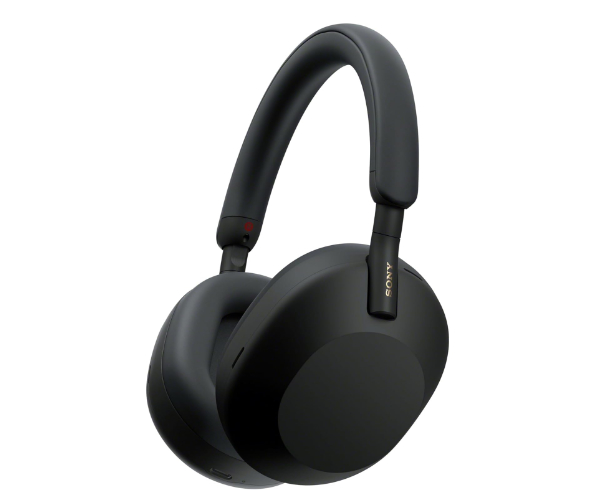
Cruise ships are surprisingly noisy environments. Between the constant low-frequency thrum of the 12-cylinder diesel engines and the chaotic chatter of the buffet, the Sony WH-1000XM5 headphones are an essential sanity-saver. They utilize an 8-microphone array and two proprietary processors (V1 and QN1) to create the most effective active noise cancellation (ANC) barrier on the market today.
The "Auto NC Optimizer" is particularly useful at sea. It analyzes atmospheric pressure and ambient noise to adjust the cancellation level dynamically. This is a game-changer if your cabin is near the ship's thrusters or if you are trying to nap on a windy upper deck. With a 30-hour battery life and fast charging (3 hours of playback from 3 minutes of charging), they will easily last through an entire transatlantic flight and several days of poolside use.
The honest trade-off here is portability. Unlike previous models, the XM5s do not fold into a compact ball; they only rotate flat. This means the carrying case takes up more room in your personal item. Additionally, they are not waterproof. While they are perfect for the quiet solarium, you must be careful around the main pool area where splashes and high humidity could damage the delicate internal microphones.
The XM5s use microphones to sample ambient noise and then generate an "anti-noise" sound wave that is exactly 180 degrees out of phase. Why it matters: When the "anti-noise" wave meets the engine drone, they cancel each other out (destructive interference), creating a pocket of silence that protects your hearing and reduces travel fatigue.
Best for Tracking: Apple AirTag
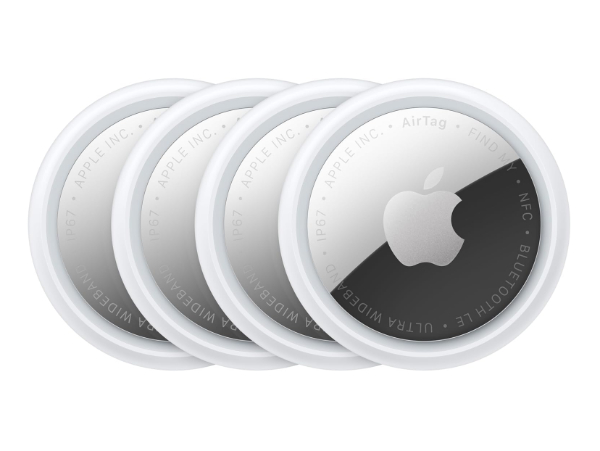
The logistical nightmare of cruise travel often starts at the pier, where thousands of suitcases are sorted into massive piles. An Apple AirTag in each piece of luggage provides peace of mind that your bags actually made it onto the ship. Once on board, the "Find My" network leverages the high density of iPhone-carrying passengers to ping your bag's location even if you are several decks away.
Equipped with the U1 chip, the AirTag offers "Precision Finding" using Ultra-Wideband (UWB) technology. When you are looking for your bag in a massive terminal hall after disembarkation, your iPhone will show you an arrow and the exact distance (to the inch) of where your bag is hidden. It's also IP67 rated, meaning it can survive being submerged in a meter of water for 30 minutes - vital if your bag is sitting on a rainy dock.
The obvious limitation is the Apple ecosystem. If you are an Android user, this product is useless; you would need a Tile or Samsung SmartTag instead. Also, remember that a cruise ship is a giant metal box; while the AirTag works well in open spaces or through stateroom doors, it may struggle to find a signal if the tag is deep in the ship's cargo hold surrounded by thick steel plating.
UWB is a short-range, high-bandwidth wireless protocol that operates at very high frequencies. Why it matters: Unlike Bluetooth, which only estimates distance based on signal strength, UWB measures the actual "time of flight" of the signal. This allows for centimeter-level accuracy when hunting for a lost suitcase in a crowded port terminal.
Best for Excursions: GoPro HERO12 Black
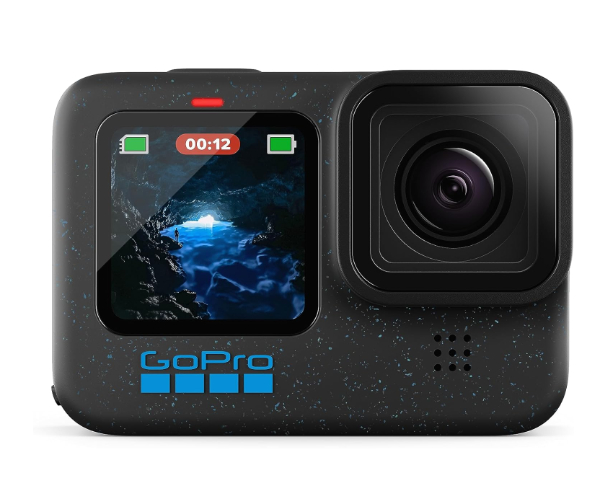
From snorkeling in the Caribbean to trekking Alaskan glaciers, a cruise excursion is no place for a fragile smartphone. The GoPro HERO12 Black is the definitive action camera for the high seas. It is natively waterproof to 33 feet (10 meters) without a housing, and its "Enduro" battery technology ensures it keeps recording even in the biting cold of northern itineraries.
The HERO12's technical crown jewel is HyperSmooth 6.0 stabilization. It uses the GP2 processor to analyze motion and crop the image in real-time to eliminate shakes, making even a bumpy tender boat ride look like professional cinematography. It also introduces 10-bit color and HDR video, which is crucial for capturing the high-contrast environment of a sun-drenched beach without blowing out the highlights in the sand and sky.
The trade-off is the learning curve and accessory "tax." To get the most out of the GoPro, you'll need a fast UHS-III microSD card and likely a few spare batteries, as 5.3K recording drains the unit in about 70 minutes. It also lacks a built-in GPS (removed to improve battery life), so you won't be able to overlay your speed or location on the video without using your phone to sync the data later.
10-bit color allows the camera to record 1.07 billion colors compared to the 16.7 million in standard 8-bit video. Why it matters: In oceanic footage, 8-bit video often shows "banding" in the blue gradients of the water. 10-bit color provides smooth, realistic transitions in the sea and sky, making your vacation footage look cinematic.
Best for Deck Reading: Kindle Paperwhite (16GB)
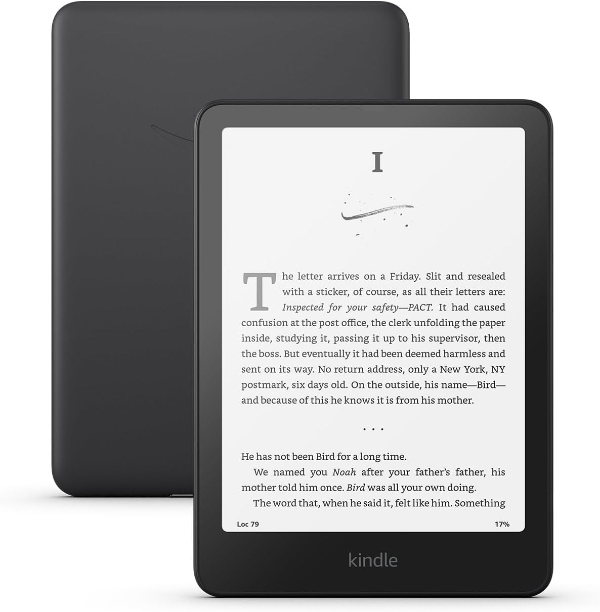
Reading on a standard tablet under the intense tropical sun is a recipe for eye strain and screen glare. The Kindle Paperwhite uses an E-Ink display that looks exactly like printed paper and actually becomes easier to read the brighter the sun gets. The 6.8-inch display features a 300 ppi (pixels per inch) resolution, ensuring text remains crisp and book-like even when you're lounging on the top deck.
For cruisers, the IPX8 rating is the standout technical specification. The device can survive being submerged in 2 meters of fresh water for up to 60 minutes. This means you can read in the hot tub or by the pool without worrying about a single splash destroying your entire 16GB library. Additionally, the battery life is measured in weeks, not hours, so you likely won't even need to bring a charger for a 7-day cruise.
The "honest limitation" is that it is a single-purpose device. It doesn't handle apps, social media, or color magazines well. The screen refresh rate is slow, which can be frustrating if you are used to the 120Hz refresh rates of modern smartphones. However, for an environment where relaxation is the goal and glare is the enemy, the Paperwhite is functionally perfect.
E-Ink displays work by moving tiny black and white microcapsules through a clear fluid using electrical charges. Why it matters: Once the "ink" is moved into place to form words, it stays there without requiring power. It reflects light like a physical book rather than emitting it, resulting in zero glare even in direct 100,000-lux sunlight.
How We Chose These Products
Our evaluation process focused on the unique regulatory and environmental challenges of cruise travel. We prioritized compliance (items that won't be confiscated by security), ruggedization (high IP ratings for water resistance), and technical density (products that solve multiple problems in a small footprint). Every product listed is currently in production and represents the current technological peak for its specific category as of this review.
Comparison Overview
| Product | Primary Benefit | Key Technical Spec | Portability |
|---|---|---|---|
| Anker 525 | Cruise-Legal Charging | 67W GaN / Non-Surge | Compact Hub |
| Sony XM5 | Noise Isolation | 8-Mic Active ANC | Full-Size Flat |
| Apple AirTag | Luggage Security | UWB / IP67 Rated | Coin-Sized |
| GoPro HERO12 | Excursion Video | 5.3K HDR / HyperSmooth 6.0 | Pocket-Sized |
| Kindle Paperwhite | Sun-Readable Reading | 300 ppi E-Ink / IPX8 | Slim Handheld |
Buying Guide: What to Look For
- Verify Non-Surge Compliance: Ensure your power hub does not use MOVs. Most ships will seize any power strip with "Surge Protector" printed on the box.
- Check IP (Ingress Protection) Ratings: Aim for IPX7 or higher for devices used near the pool. "Water-resistant" is not a technical standard; IPX8 is.
- Offline Ecosystem Support: Since satellite Wi-Fi can be spotty, ensure your tech supports "Offline Mode" for maps, books, and music before you leave the pier.
- GaN vs. Silicon: In cramped cabins, heat is an enemy. Prioritize Gallium Nitride (GaN) chargers which run significantly cooler than standard silicon bricks.
General Pro / Cons
| Pro | Con |
|---|---|
| Non-surge strips pass ship security inspections. | Non-surge strips lack high-end hardware protection. |
| Active ANC significantly reduces travel fatigue. | Premium ANC units are rarely waterproof. |
| E-Ink displays eliminate glare in direct sun. | E-Ink refresh rates are too slow for video. |
| Waterproof action cameras protect your expensive phone. | Action cameras require high-speed, expensive SD cards. |
| UWB trackers find bags in chaotic terminals. | Trackers require specific smartphone ecosystems (iOS/Android). |
| GaN chargers provide more power in less space. | Premium charging tech has a higher upfront cost. |
| IPX8 ratings allow for reading in hot tubs/pools. | Saltwater requires thorough rinsing after exposure. |
| Bluetooth trackers provide peace of mind in transit. | Ship bulkheads can block signal between decks. |
Final Summary
Optimizing your cruise experience requires gear that respects the physical and regulatory boundaries of the ship. By prioritizing non-surge power like the Anker 525 and environmental tools like the Kindle Paperwhite and Sony XM5, you transform a potentially frustrating environment into a seamless vacation. Each of these products addresses a real friction point - whether it's noise, sunlight, or power - making them essential additions to your packing list. Aggregate rating of the products reviewed: 4.76 out of 5.