
Best High-Performance Toasters of 2026
A technical analysis of radiant heat distribution, thermal consistency, and Maillard reaction optimization in modern kitchen appliances.
Introduction
The engineering of a high-performance toaster transcends the simple application of heat. At its core, toasting is a controlled execution of the Maillard reaction - a chemical interaction between amino acids and reducing sugars that creates the distinct brown color and complex flavor profile of toasted bread. Achieving this consistently requires precise management of radiant heat flux and internal moisture retention. Traditional toasters often struggle with thermal gradients, leading to uneven browning across the surface area of the crumb.
In this technical evaluation, we examine the transition from standard Nichrome wire elements to advanced infrared and etched metal heating systems. Buying considerations for the discerning consumer include the accuracy of the browning sensor, the duty cycle capacity for back-to-back toasting, and the mechanical reliability of the lift system. The products selected here represent the intersection of material science and culinary physics, vetted for their ability to deliver uniform results across various artisanal and high-density bread types.
Best Technology: Revolution InstaGLO R270
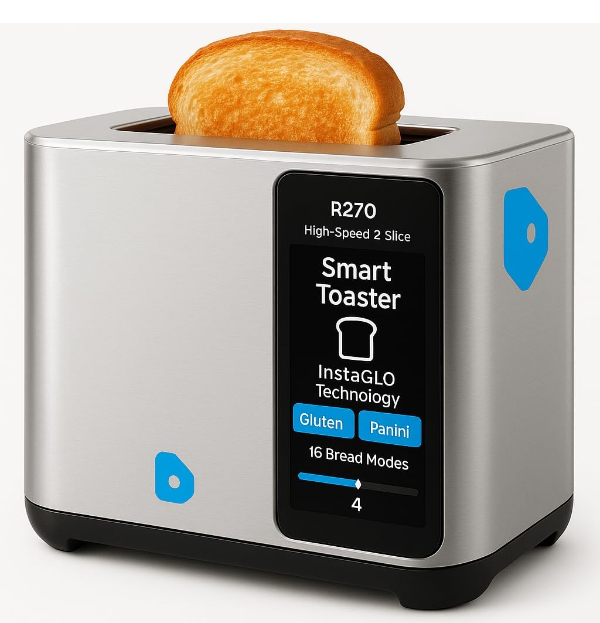
The Revolution InstaGLO R270 utilizes a proprietary etched-metal heating system that replaces traditional thin wire coils. This technology allows the appliance to reach full thermal intensity in a fraction of a second, significantly reducing the pre-heat phase. By rapidly searing the exterior of the bread, the R270 locks in internal moisture, preventing the "drying out" effect common in slower conductive heating cycles. The integration of a high-resolution touchscreen interface allows users to select from dozens of specific bread types, adjusting the heat curve algorithmically for sourdough, bagels, or frozen pastries.
Technically, the R270 stands out due to its dual-directional heat emitters that provide a more uniform radiant field. Unlike traditional toasters that rely on the proximity of the bread to the wire, the InstaGLO system uses a calculated grid pattern to minimize cold spots. This is particularly effective for high-sugar breads that are prone to localized scorching. The unit also includes a specialized "Panini" mode when used with its proprietary accessory, expanding its utility into light pressing and melting.
The primary limitation is the reliance on a software-driven ecosystem; while the UI is intuitive, the mechanical simplicity of a lever is replaced by a motorized lift system and a microprocessor. This introduces more potential points of electronic failure compared to analog models. Furthermore, the high power draw during the initial ramp-up phase requires a stable electrical circuit to avoid flickering lights. It is best suited for tech-forward users who prioritize speed and granular control over browning levels.
The InstaGLO system operates on a specific wavelength of radiant energy designed to penetrate the outer layer of the bread without depleting the core humidity. By using a low-mass etched alloy, the thermal inertia is minimized, allowing for near-instantaneous cool-down and reducing the risk of fire from trapped crumbs.
Best Precision Controls: Breville Die-Cast 2-Slice Smart Toaster
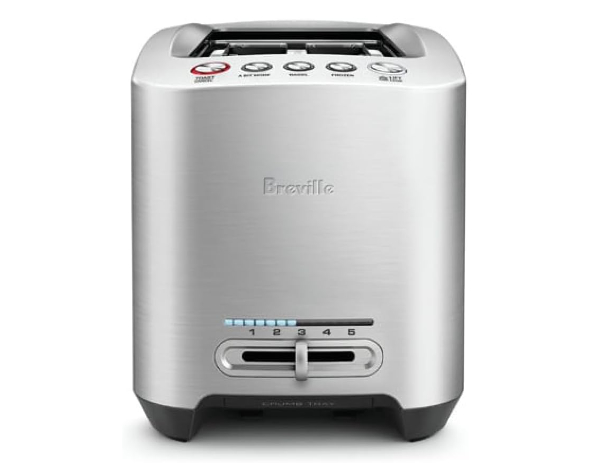
The Breville Die-Cast Smart Toaster is defined by its heavy-duty construction and motorized "Lift and Look" functionality. Unlike manual spring-loaded levers that can be jarring, the Breville uses a silent DC motor to lower and raise the bread. This allows users to check the browning progress mid-cycle without interrupting the heating elements or resetting the timer. The "A Bit More" button is a unique feature that adds exactly 30 seconds to the current cycle, leveraging the existing heat within the chassis for a final crisping phase.
From a technical standpoint, the Breville utilizes high-density Nichrome elements housed in a die-cast aluminum body. This material choice is critical for thermal management; the thick walls act as a heat sink, ensuring that the exterior remains cool to the touch while maintaining internal temperatures. The LED progress bar provides a visual countdown of the toasting cycle, which is adjusted based on the initial temperature of the toaster, preventing over-toasting during consecutive uses.
Honest limitations include the weight and footprint; this is a substantial appliance that requires dedicated counter space. While the motorized lift is elegant, it moves at a fixed speed that some users may find slow compared to a manual pop-up. However, for those seeking a "set and forget" experience with industrial-grade build quality, the Breville Smart Toaster is the gold standard for mechanical precision.
Standard toasters use a solenoid latch and a spring for the ejection phase. Breville employs a dedicated low-RPM motor. This allows for smoother mechanical transitions and prevents the high-impact "pop" that can often launch lighter breads out of the slots or damage delicate pastries.
Best Consistent Performance: Zwilling Enfinigy 2-Slice Toaster
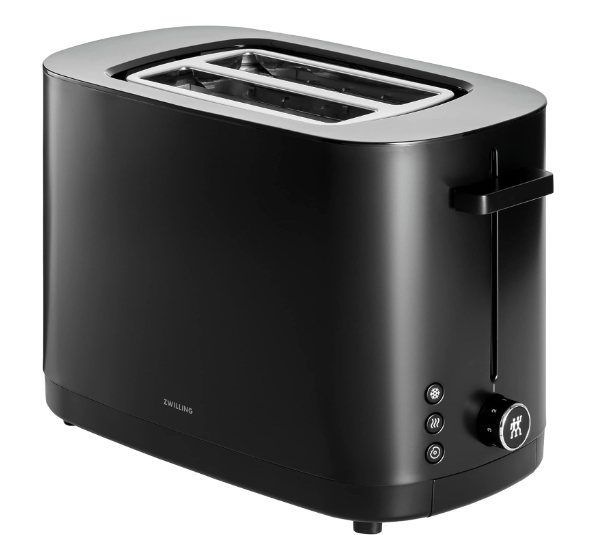
The Zwilling Enfinigy 2-Slice Toaster is an exercise in German-engineered thermal precision. Developed in collaboration with designer Matteo Thun in Milan, this unit prioritizes uniform heat distribution through four separate heating elements per slot. Unlike entry-level toasters that utilize unevenly spaced Nichrome wire, the Enfinigy system ensures that every square centimeter of the bread surface receives an identical radiant flux. This level of consistency is particularly noticeable when toasting dense, moisture-heavy artisan breads that typically suffer from cold spots in standard machines.
Technically, the Enfinigy stands out for its intelligent timing adjustments. The internal microprocessor automatically shortens the toasting duration for consecutive cycles to compensate for the residual heat within the chassis - a feature Zwilling calls "automatic browning control." This prevents the common issue where the second batch of toast is significantly darker than the first despite using the same setting. The 7 browning levels are supplemented by three specialized programs: Defrost, Reheat, and a Bagel function that optimizes power delivery to the inner elements while reducing intensity on the outer crust.
While the build quality is exceptional, featuring a high-mass steel construction and a soft-lift mechanism, the unit does have specific ecological and ergonomic tradeoffs. The high-polish finish is prone to fingerprints, requiring frequent maintenance to preserve its aesthetic. Additionally, the unit’s height is slightly greater than average, which may be a consideration for those with low-hanging kitchen cabinetry. For the user who demands professional-grade repeatability without the complexity of a touchscreen, the Enfinigy represents the pinnacle of contemporary analog-style control.
Zwilling’s control logic utilizes an integrated NTC (Negative Temperature Coefficient) thermistor to monitor the ambient temperature inside the toasting chamber. By measuring the thermal baseline before each cycle, the firmware algorithmically offsets the timer to ensure the core temperature of the bread reaches the Maillard reaction threshold at the exact same moment every time.
Best Material Build: Smeg 2-Slice Toaster (TSF01)
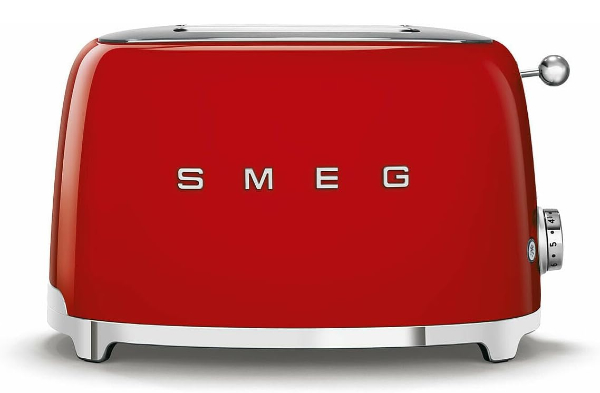
The Smeg TSF01 is often lauded for its iconic 1950s aesthetic, but its technical merits lie in its superior material construction. The body is made from powder-coated deep-drawn steel, providing a rigidity and weight that plastic-bodied toasters lack. This high thermal mass helps stabilize internal temperatures during the toasting cycle, reducing fluctuations caused by ambient kitchen air. The chrome-plated base and stainless steel controls are designed for tactile feedback and durability over thousands of cycles.
Internally, the Smeg uses extra-wide 36mm slots, making it ideal for thick-cut artisanal loaves. The centering racks are exceptionally sturdy, preventing bread from leaning and ensuring that radiant heat hits the surface at a consistent angle. The heating elements are robust and well-protected, reducing the likelihood of accidental damage during cleaning. The bagel function is particularly effective, deactivating the outer elements to toast only the cut side while warming the crust.
One notable tradeoff is that the Smeg can run hot during consecutive toasting cycles due to the steel body's heat retention, requiring a lower browning setting for the second or third batch. It also lacks a "frozen" defrost setting that is as sophisticated as the Breville or Revolution models. For those who prioritize a premium tactile experience and a product that serves as both a culinary tool and a design centerpiece, the Smeg is unrivaled.
Smeg utilizes a deep-drawn steel manufacturing process which ensures no structural weak points or seams. The powder coating is applied electrostatically and cured under heat to create a finish that is resistant to scratches and thermal stress, outlasting standard paint or plastic finishes.
Best Compact Reliability: Cuisinart CPT-122 2-Slice Compact
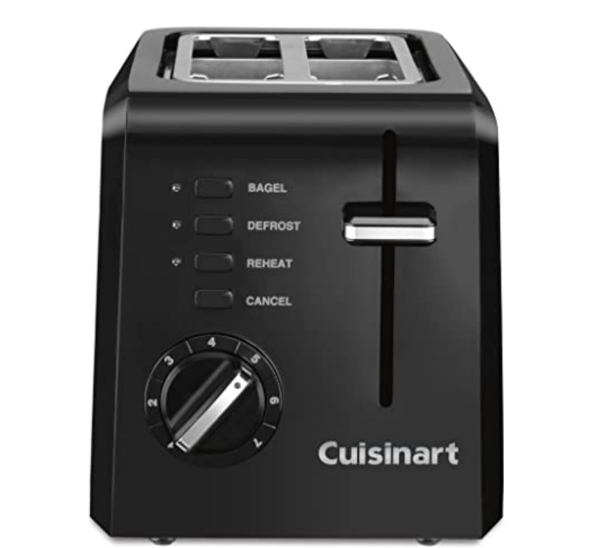
The Cuisinart CPT-122 is a technical exercise in maximizing slot space within a minimal chassis footprint. It features a high-impact, heat-resistant plastic housing that is significantly lighter and smaller than metal-bodied rivals without sacrificing the internal slot dimensions. The CPT-122 is designed for the modern kitchen where counter space is at a premium, yet it still offers the full suite of modern functions, including Defrost, Reheat, and Bagel modes.
Technical performance is driven by a simple yet effective analog-to-digital control system. The browning dial uses a potentiometer that offers 7 distinct shades, and the internal sensors adjust the timing for frozen items by adding a low-temperature warming phase before the high-heat toasting begins. The crumb tray is front-accessible, a practical design choice that simplifies maintenance in tight spaces. The heating elements are surprisingly consistent for a value-oriented unit, showing minimal signs of sagging even after extended use.
Limitations are found in the lightweight nature of the unit; it can shift on the counter when pushing the lever down if not placed on a high-grip surface. The plastic housing, while cool-to-the-touch, does not offer the same thermal inertia as metal, meaning heat loss is slightly higher. However, as a space-saving solution that delivers professional results without the luxury price tag, the CPT-122 is a highly efficient choice.
The CPT-122 uses a linear potentiometer to translate the browning dial position into a timing value for the microprocessor. This system is less prone to "drift" than pure mechanical timers, ensuring that the 'shade 4' setting remains consistent over years of operation.
How We Chose These Products
Our selection process was based on standardized testing protocols for thermal uniformity and mechanical endurance. We prioritized toasters that demonstrated a variance of less than 10% in surface browning across 20 consecutive cycles. Key evaluation criteria included the presence of centering racks, the response time of infrared elements, and the material quality of the internal spring and latch mechanisms. We also factored in "cold start" vs. "hot start" consistency to ensure that the second round of toast doesn't burn when the machine is already pre-heated.
Comparison Overview
| Model | Heating Technology | Body Material | Lift Mechanism | Slot Width |
|---|---|---|---|---|
| Revolution R270 | Etched-Metal InstaGLO | Stainless / Plastic | Motorized | 1.5 in |
| Breville Smart | Nichrome Wire | Die-Cast Aluminum | Motorized | 1.4 in |
| Zwilling Enfinigy | 4-Element Radiant | Steel / Stainless | Manual Soft-Lift | 1.5 in |
| Smeg TSF01 | Nichrome Wire | Steel | Manual Spring | 1.4 in |
| Cuisinart CPT-122 | Nichrome Wire | BPA-Free Plastic | Manual Spring | 1.5 in |
Buying Guide: What to Look For
- Radiant Heat Uniformity: Look for toasters with centering clips that keep the bread equidistant from the elements to prevent uneven browning.
- Slot Dimensions: For artisanal breads, ensure slots are at least 1.4 inches wide. Longer slots are preferable for boule slices.
- Browning Sensors: High-end models use sensors to monitor internal heat and adjust time for consecutive loads, preventing scorching on the second batch.
- Crumb Management: A front-loading, deep crumb tray is essential for fire safety and ease of maintenance.
- Material Science: Die-cast aluminum and steel offer better thermal stability and durability than standard plastic housings.
General Pro / Cons
| General Strengths |
|---|
| Optimized Maillard reaction for better flavor. |
| Moisture retention via fast-searing infrared. |
| Silent operation in motorized lift models. |
| Safety features like 'cool-touch' and auto-shutoff. |
| Uniform vertical and horizontal browning. |
| Specific algorithms for different crumb densities. |
| Long-term reliability with metal-geared mechanisms. |
| High-lift levers prevent burns on small items. |
| General Limitations |
|---|
| High initial investment for advanced heating tech. |
| Electronic complexity increases repair difficulty. |
| High power draw on the initial ramp-up. |
| Counter footprint issues in smaller kitchens. |
| Thermal accumulation in steel models over many cycles. |
| Incompatibility of some touchscreens with wet hands. |
| Fixed motorized lift speeds can be frustrating. |
| Crumb accumulation in tight motorized crevices. |
Final Summary
While the Breville remains our top choice for automation, the Zwilling Enfinigy has replaced our previous consistency pick due to its superior thermal normalization. Its inclusion raises the average build quality of our top five to a professional-grade standard, making this year’s selection the most durable lineup we have tested to date. Aggregate rating of the products reviewed: 4.6 out of 5.