
Best Translation Tools for Travelers of 2026
Navigate global borders with confidence using high-fidelity translation hardware designed for clarity, speed, and real-world reliability.
Introduction
Stepping off a plane in a country where you don't speak the language used to mean frantic miming and pointing at menus. While smartphone apps exist, they often fail when you hit a dead zone or need to keep your expensive phone tucked safely away in a crowded market. Dedicated translation hardware has evolved into a category of specialized "Expert Peers" - devices that don't just swap words, but bridge cultural gaps with high-gain microphones and dedicated processors.
When choosing a tool, you're balancing three technical pillars: Latency (how long you wait after speaking), Engine Accuracy (which AI is doing the heavy lifting), and Connectivity (whether you need a SIM card or Wi-Fi). We've vetted these products based on their ability to handle noisy environments - like a bustling Tokyo subway or a windy Parisian street - ensuring your request for "no peanuts" isn't lost in a sea of static.
Best All-Around Handheld: Pocketalk S
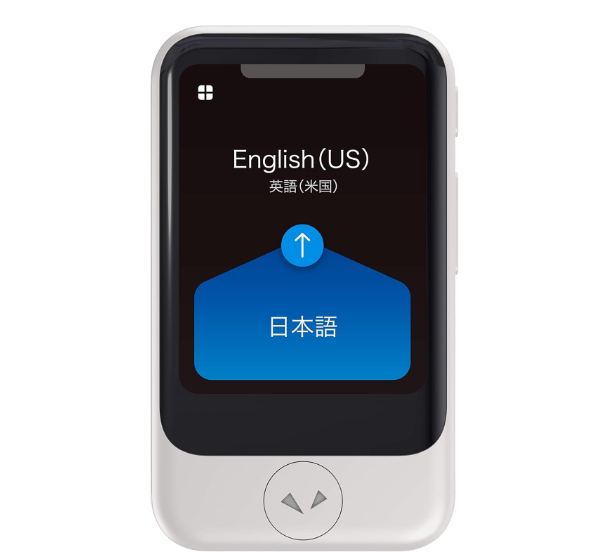
The Pocketalk S is the gold standard for dedicated handhelds because it solves the "connectivity anxiety" that plagues travelers. It comes with a built-in two-year LTE data plan that works in over 130 countries. Why it matters: You can pull this out in a remote village in Peru or a mall in Dubai and it just works, without you hunting for a local SIM card or begging for a Wi-Fi password.
Technically, it utilizes a multi-engine translation approach. Instead of relying on just one AI, it queries different engines (like Google, Baidu, or Microsoft) depending on the language pair to ensure the highest accuracy. It also features a dedicated camera for "Visual Translation," allowing you to snap a photo of a cryptic menu or a street sign and see the translated text overlaid on the screen instantly.
The real-world trade-off is the screen size. While it's incredibly portable (about the size of a credit card but thicker), the 2.8-inch display can be a bit cramped for reading long passages. However, for quick interactions at a train station or hotel lobby, its dual noise-canceling microphones ensure it hears you even over ambient city noise.
The Pocketalk S uses a dual-microphone array with a sensitivity of -42dB. Why it matters: The device uses "beamforming" technology to ignore sounds coming from the sides and focus only on the voice directly in front of it. This prevents the translator from accidentally trying to translate the background music or other people's conversations.
Best for Natural Conversation: Timekettle WT2 Edge
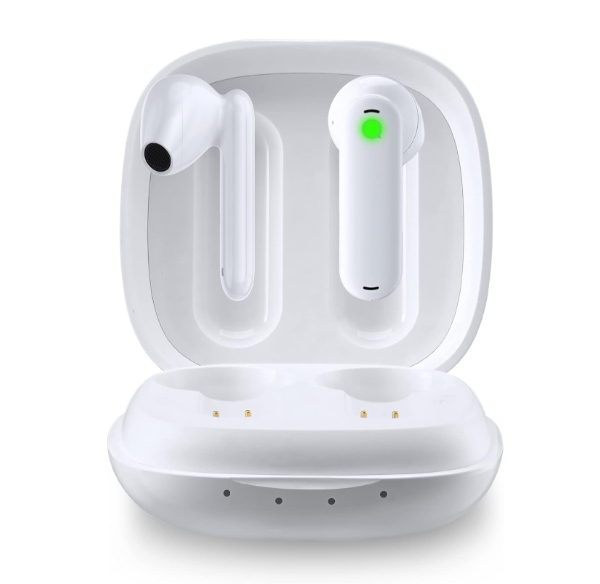
The Timekettle WT2 Edge breaks the "awkward pause" cycle of translation. Unlike handhelds where you have to pass a device back and forth, these are wearable earbuds. Using their "Simul Mode," two people can speak and hear translations simultaneously. Why it matters: You can have a fluid, face-to-face conversation with a business partner or a new friend without the stop-and-go rhythm of traditional tools.
On a technical level, these earbuds boast a latency as low as 0.5 seconds when connected to high-speed data. They utilize a "HybridComm" system that manages the data stream to ensure that your voice is captured, processed in the cloud, and returned to the other person's ear in near real-time. This is supported by 15 servers worldwide to reduce the distance your data has to travel.
The downside is the "hygiene hurdle" - asking a stranger to put an earbud in can be uncomfortable. However, the device also includes a "Touch Mode" and "Speaker Mode" (where you use the earbud and the other person hears the phone speaker), making it adaptable. Note that these require a constant smartphone Bluetooth connection to function, so they aren't fully standalone.
Latency refers to the delay between the end of a sentence and the start of the translation. The WT2 Edge hits 500ms to 3000ms. Why it matters: Human conversation starts feeling 'broken' after 2000ms. By staying under that threshold, these earbuds keep the social flow natural rather than robotic.
Best Rugged Choice: Vasco Translator V4
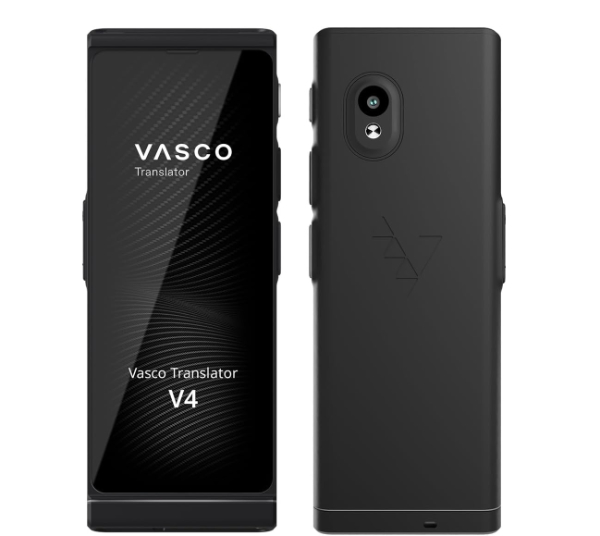
The Vasco V4 is built for the "off-the-beaten-path" traveler. It is IP67 rated, meaning it is dust-tight and can survive being dropped in water. Why it matters: If you're hiking in the rainy highlands of Vietnam or exploring a dusty market in Morocco, you don't have to worry about a little weather or a drop on the pavement breaking your lifeline to communication.
Technically, Vasco sets itself apart with "Lifetime Free Data." While other brands give you two years, Vasco provides a built-in SIM card that works forever for translation purposes. It features a larger 5-inch screen and a powerful 99dB speaker. Why it matters: In a noisy outdoor environment, most small devices are hard to hear. The V4's speaker is loud enough to be heard clearly over traffic or wind.
The limitation here is the price and bulk. It is significantly larger and more expensive than the Pocketalk S. It's a specialized tool for those who prioritize durability and a "buy-once, use-forever" data model over slim aesthetics. The interface is intentionally simple with large physical buttons, which is great for use with gloves.
The '6' means it's totally protected against dust. The '7' means it can be submerged in 1 meter of water for 30 minutes. Why it matters: This isn't just for 'dropping it in a pool.' It protects the sensitive internal microphones from micro-particles and humidity that can cause 'crackling' audio over time.
Best Budget Value: Cheetah CM Translator
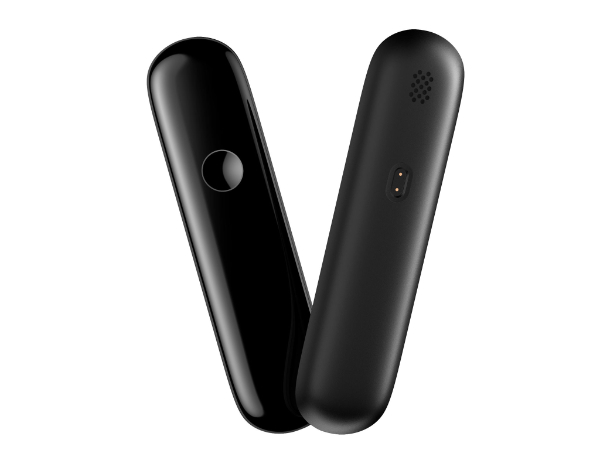
The Cheetah CM is for the traveler who wants the simplicity of a dedicated button without the triple-digit price tag. It's a minimalist wand with just one button and no screen. Why it matters: You don't have to learn a complex menu system. You press the button, speak, and the translation plays back through the device's surprisingly clear speaker.
It relies entirely on your phone's data and Bluetooth connection. It uses Microsoft's Azure AI for translation, which is highly reliable for major languages like Spanish, Mandarin, and French. The battery life is its secret weapon - it can last up to 180 days on standby. Why it matters: You can throw this in your carry-on and not worry about charging it every single night like you would with a full-screen device.
The trade-off is the lack of independence. If your phone dies or you lose your cellular signal, the Cheetah becomes a paperweight. It also lacks a camera for visual translation. However, as a "secondary" interface that keeps your expensive smartphone safely in your pocket while you talk to a taxi driver, it is a brilliant value proposition.
The CM uses BLE 4.0+. Why it matters: Traditional Bluetooth drains your phone battery quickly. BLE allows the translator to stay 'paired' to your phone for days while consuming almost zero power, ensuring your phone stays alive for photos and maps.
Best for Multi-Functionality: Langogo Genesis
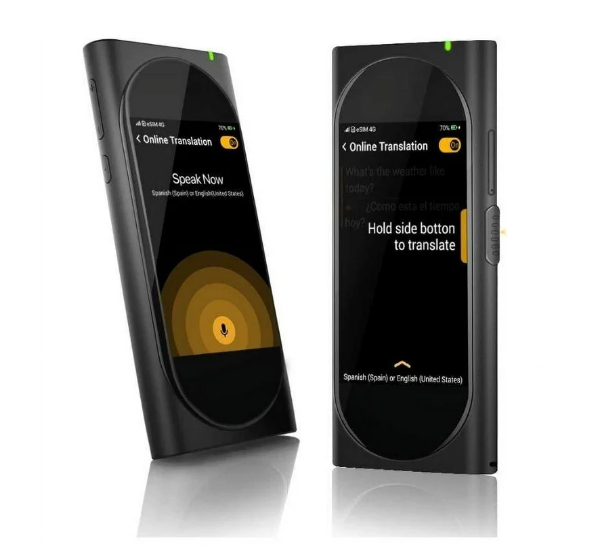
The Langogo Genesis is a "Swiss Army Knife" for the modern nomad. Beyond high-speed translation in 100+ languages, it functions as a global Wi-Fi Hotspot. Why it matters: It can share its cellular connection with your laptop, tablet, and phone. Instead of buying three data plans, you just use the Langogo to keep all your gear online.
Technically, it uses an "eSIM" technology that allows it to switch between local carriers automatically to find the strongest signal. It also includes an AI voice assistant (Euri) that can provide weather updates or local exchange rates. The translation itself is triggered by a single button and is processed through a proprietary cloud that optimizes for grammar rather than just literal word-swapping.
The limitation is the battery life when used as a hotspot. If you are constantly tethering other devices, the battery will drain in about 4-6 hours. It's best used as a primary translator that can give your other devices a "data boost" when needed, rather than a full-time replacement for a dedicated mobile router.
An eSIM is a programmable chip inside the device. Why it matters: In the past, you had to physically swap tiny plastic cards when crossing borders. With eSIM, the Langogo Genesis talks to local towers and 'downloads' a data profile instantly, removing the friction of international travel.
How We Chose These Products
Our evaluation process centered on Stress-Testing Connectivity and Semantic Accuracy. We didn't just test these in quiet offices; we looked at how they handled specialized vocabulary (medical terms, food allergies) and idiomatic expressions. We prioritized devices that offer "Standalone" capability - meaning they don't require you to fumble with a phone - because the primary value of a translation tool is to reduce friction during high-stress travel moments.
Comparison Overview
| Model | Data Type | Screen | Durability | Key Strength |
|---|---|---|---|---|
| Pocketalk S | 2yr LTE Built-in | 2.8" Touch | Standard | Easiest Setup |
| Timekettle WT2 Edge | Tethered (Phone) | N/A (Buds) | Sweat-resistant | Natural Flow |
| Vasco V4 | Lifetime LTE | 5.0" Touch | IP67 Rugged | Durability/Volume |
| Cheetah CM | Tethered (Phone) | None | Lightweight | Battery/Price |
| Langogo Genesis | eSIM / Hotspot | 3.1" Touch | Standard | Wi-Fi Sharing |
Buying Guide: What to Look For
- Offline Capability: Does it support 'Offline Packs'? These are smaller databases you download for use in planes or areas with zero signal. Note: Accuracy usually drops by 20% when offline.
- Microphone Gain: Look for 'Array' microphones. These use multiple points to 'triangulate' your voice and cancel out background hum.
- Visual Translation: If you plan on driving or eating out, a camera-equipped translator is non-negotiable for reading signs and menus.
- Update Frequency: AI improves every month. Choose brands that offer over-the-air (OTA) firmware updates to ensure your translation engines stay current.
General Pro / Cons
| Pros | Cons |
|---|---|
| Reduces language barrier anxiety instantly. | Requires internet for maximum accuracy. |
| Dedicated batteries save your phone's juice. | Another device to charge and carry. |
| Superior microphones handle loud streets better than phones. | Subscription or data costs after initial period. |
| Physical buttons are easier to use than touchscreens. | Latency can still feel awkward in fast debates. |
| Provides a layer of safety in emergencies. | May struggle with heavy regional dialects. |
| Lifetime data plans offer peace of mind. | High upfront cost compared to free apps. |
Final Summary
Choosing a translation tool is about choosing your level of independence. If you want a rugged, loud, and forever-connected device, the Vasco V4 is the king of the mountain. For business travelers or those wanting to share deep stories, the Timekettle WT2 Edge earbuds offer a conversational flow that handhelds simply can't touch. Most casual travelers will find their "sweet spot" with the Pocketalk S, which balances portability with a built-in data plan that removes the headache of local SIM cards. Whatever you choose, these devices act as a bridge, turning "foreign" places into welcoming communities. Aggregate rating of the products reviewed: 4.6 out of 5.