
Best Treadmills of 2026
An authoritative analysis of high-performance cardio machines, focusing on motor durability, deck suspension, and the trade-offs of modern fitness ecosystems.
Introduction
Buying a treadmill often feels like navigating a minefield of over-promised specs and hidden subscription costs. Most consumers find themselves caught between the desire for a "gym-quality" experience and the harsh reality of a machine that might end up as an expensive clothes rack in a cramped spare room. To make an informed choice, you must look past the flashy touchscreens and understand the material science of the belt, the thermal management of the motor, and the actual durability of the frame.
This guide focuses on Continuous Horsepower (CHP), a metric that defines a motor's ability to maintain speed over a long run without overheating, rather than just "Peak HP," which is often a misleading marketing figure. We also analyze deck suspension--measured in durometers or shock-absorption percentages--which determines whether your joints will thank you or ache after a five-mile run. By addressing the actual limitations of home assembly and the trade-offs of proprietary software ecosystems, we aim to demystify the prosumer treadmill landscape.
Best for Interactive Training: NordicTrack Commercial 1750
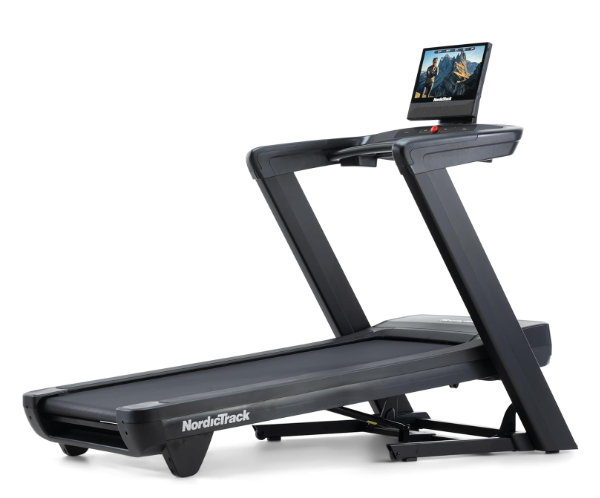
The NordicTrack Commercial 1750 is the benchmark for integrated fitness technology. Its primary strength lies in the seamless marriage of hardware and software. The machine features a 3.5 CHP motor, which is a significant spec because it ensures the belt moves at a constant rate even as your foot strike applies downward pressure. This prevents the "stutter" common in cheaper machines. For the user, this means a smoother, safer run that mimics the consistency of an outdoor track.
Technically, the 1750 stands out with its -3% decline to 12% incline range. While most treadmills only go up, the ability to go "downhill" engages different muscle groups, specifically the anterior tibialis and quads, which is vital for balanced knee health. This machine is best for those who thrive on coached sessions, as the iFIT software can automatically adjust your speed and incline in real-time based on the trainer's terrain.
The honest trade-off here is ecosystem lock-in. To get the most out of the 14-inch HD touchscreen, you effectively need a monthly iFIT subscription. Without it, the screen is limited to basic manual controls. Furthermore, the unit is incredibly heavy (over 300 lbs), making assembly a two-person job that requires significant floor space. It is a premium tool that demands a dedicated footprint.
The 1750 uses a specialized lift motor with a "Z-Grip" drive system to achieve negative incline. Why It Matters: Standard treadmills use a simple screw-jack to lift the front. By incorporating a secondary pivot point, the 1750 can drop the front rollers below the rear rollers. This provides eccentric muscle loading, which is the gold standard for preparing your body for real-world hiking and trail running.
Best Build Quality: Sole F80
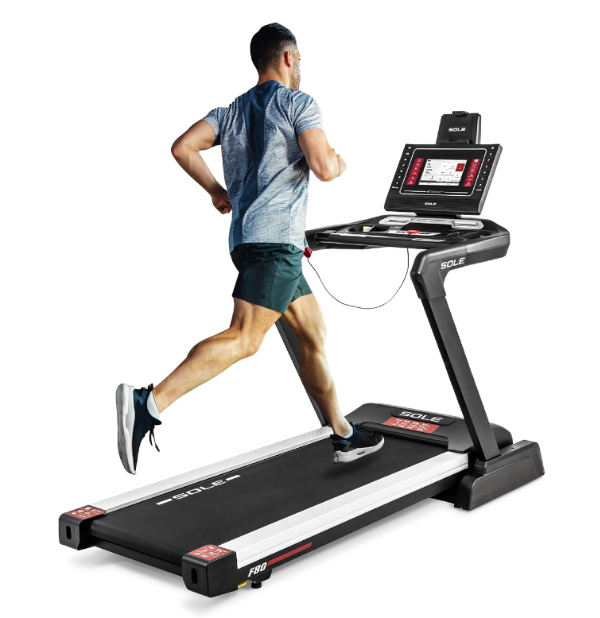
If you are skeptical of tablet-based fitness and want a machine built like a tank, the Sole F80 is the "Expert Peer" choice. It prioritizes a heavy-duty steel frame and a massive 3.5 CHP motor over fancy software. This motor is designed with larger-than-average flywheels, which act as mechanical batteries, smoothing out the rotational pulses of the motor. This translates to an incredibly stable running surface that doesn't vibrate even at its top speed of 12 mph.
The F80 is best for serious runners who value a "Whisper Deck." The cushioning system here reduces joint impact by a claimed 40% compared to running on asphalt. Unlike other machines that use cheap rubber grommets, the F80 uses industrial-grade elastomers. Practically, this means you can run longer distances without the typical knee fatigue associated with hard-surface training.
The limitations are mostly aesthetic and software-related. The interface is somewhat dated--think blue-backlit LCD--though the newer models have moved toward a basic Android touchscreen. It doesn't offer the immersive coaching of its competitors. However, the lifetime warranty on the frame and motor is the best in the industry, reflecting Sole's confidence in their material choices. It is a long-term investment in durability rather than entertainment.
Sole employs a multi-point suspension system using proprietary elastomers with a specific durometer rating of 60A. Why It Matters: A durometer measures material hardness. At 60A, these elastomers are soft enough to compress upon impact (absorbing shock) but firm enough to provide a stable "push-off" phase. This prevents the "sand-running" effect where too much cushioning drains your energy and strains your Achilles.
Best for Rapid Pace Changes: Horizon 7.0 AT
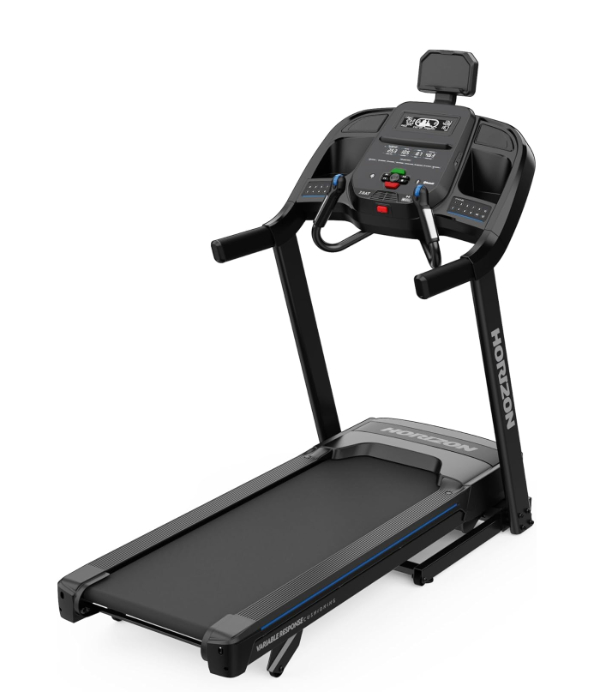
The Horizon 7.0 AT is designed for the modern "studio" runner. If you follow apps like Peloton or Zwift on your own tablet, this machine is your best partner. Its standout feature is the Rapid Sync motor system. Most treadmill motors take 5 to 10 seconds to ramp up from a walk to a sprint. The 7.0 AT does it significantly faster, which is a critical real-world benefit for High-Intensity Interval Training (HIIT) where every second of work counts.
Horizon solves the ergonomics of speed changes with "QuickDial" controls. Instead of pecking at a flat console while running at 8 mph--which can be dangerous--you simply roll a dial on the handlebars. This is a massive improvement in user experience. It allows for intuitive, tactile adjustments that don't break your stride. The machine uses a 3.0 CHP motor, which is adequate for most runners, though perhaps not for ultra-heavy usage or multiple users in one day.
The main limitation is the 60-inch belt length combined with a slightly narrower 20-inch width. While 20 inches is standard, taller runners with wide arm swings might feel slightly restricted compared to the 22-inch wide decks found on the NordicTrack or Sole. However, because it uses an open-platform approach (no locked-in subscription), it is the most flexible machine for those who already have a preferred fitness app ecosystem.
The Horizon 7.0 AT utilizes the Fitness Machine Service (FTMS) Bluetooth protocol. Why It Matters: This is a standardized language that allows the treadmill to talk to third-party apps. It doesn't just send heart rate data; it communicates speed and incline to the app in real-time. This ensures that your "virtual" avatar in an app like Zwift accurately reflects the physical effort you are putting in on the machine.
Best Space-Saving Design: Echelon Stride
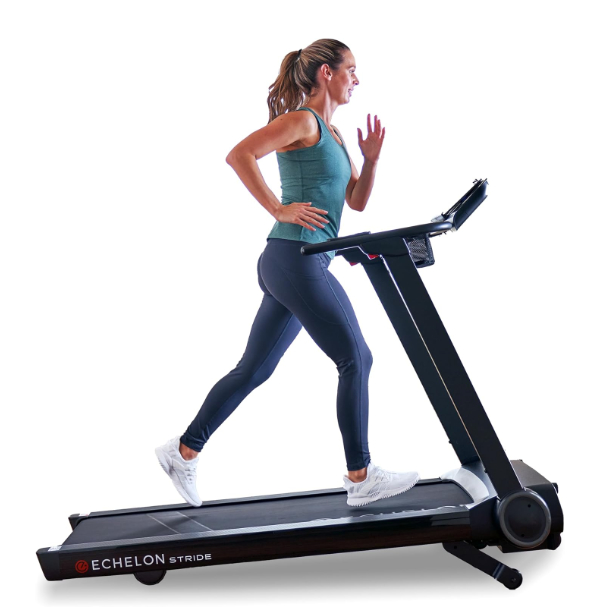
The Echelon Stride addresses the biggest hurdle for home gym owners: space. While most "folding" treadmills still leave a massive triangular footprint, the Stride uses an auto-fold technology that collapses the console and handlebars completely flat. At just 10 inches deep when folded, it can actually slide behind a door or stand vertically against a wall. This is a game-changer for apartment dwellers.
Technically, this portability comes with hardware trade-offs. The motor is a 1.75 CHP unit, which is much smaller than the 3.5 CHP units on our other picks. This means it is better suited for walking and light jogging (up to 12 mph) rather than heavy daily distance running. Smaller motors generate more heat at high speeds, which can shorten their lifespan if pushed to the limit for hours every day. For the average user looking to get 10,000 steps in, this is an acceptable compromise.
The running surface is also shorter at 55 inches. If you are over six feet tall, you might find your stride feels "cramped" during a sprint. The console is a basic LED strip, designed for you to mount your own phone or tablet. Like NordicTrack, Echelon pushes its own subscription service, but the machine is fully functional in manual mode. It is a specialized tool for those who prioritize a tidy home over professional-grade motor specs.
Echelon uses a multi-axis hydraulic linkage system to synchronize the folding of the uprights and the console. Why It Matters: Standard folding treadmills require you to manually loosen knobs or pins. The Stride's auto-fold system ensures that the electrical ribbons inside the uprights aren't pinched or crimped during the transition. This protects the machine's wiring over hundreds of fold cycles, which is a common failure point in cheap folding gear.
Best Budget Entry: ProForm Carbon TL
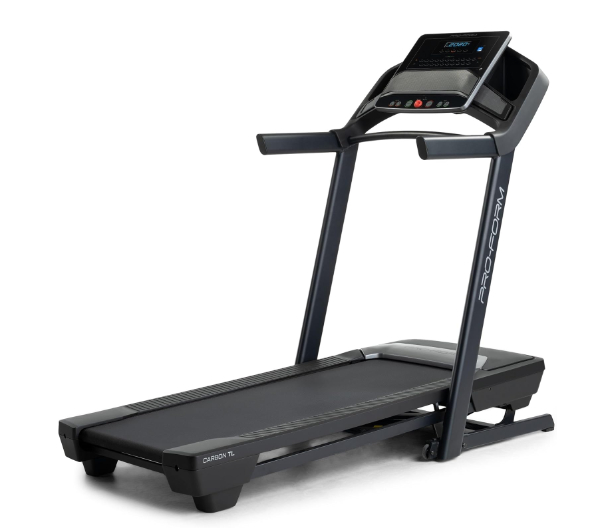
The ProForm Carbon TL is where reliability meets a price point that doesn't cause sticker shock. Many budget machines cut corners on the rollers--the metal cylinders that pull the belt. ProForm uses 1.9-inch balanced rollers. While smaller than the 2.5-inch rollers on the Sole, they are much larger than generic competitors. Larger rollers rotate more slowly for the same belt speed, which reduces friction and prevents the belt from stretching or fraying over time.
The Carbon TL features a 2.6 CHP motor and ProShox cushioning. This is an air-based suspension system that compresses to absorb energy. For the user, this means a "springier" feel than the Sole. It is best for walkers and occasional joggers who want a brand-name machine with verifiable customer support without spending $2,000. It supports a 10% incline, which is sufficient for burning extra calories without the steep mechanical complexity of a decline system.
Honest trade-offs: This machine often requires an active iFIT account to "activate" it out of the box (though you can bypass this by holding the iFIT button for 30 seconds). The screen is a simple 5-inch high-contrast display. It is not built for the heavy abuse of a 250 lb runner doing daily sprints. It is a light-to-medium duty machine that offers a solid warranty for its price bracket, making it a safe entry-level choice.
The ProShox system uses a series of air-filled chambers along the deck side-rails. Why It Matters: Air is highly compressible compared to solid rubber. As your foot hits the deck, the air is forced into secondary chambers, slowing the rate of deceleration. This reduces the Peak G-force transmitted to your shins, significantly lowering the risk of stress fractures and shin splints during the "breaking in" period of a new fitness routine.
How We Chose These Products
Our selection process is based on a "Motor-First" philosophy. We analyzed manufacturer whitepapers to verify Continuous Duty Horsepower (CHP) ratings, ensuring that every machine (with the exception of the ultra-portable Stride) meets the 2.5 CHP minimum for running. We also evaluated deck construction materials--focusing on Medium Density Fiberboard (MDF) vs. Phenolic resins--to determine long-term warp resistance. Finally, we cross-referenced warranty data and third-party repair frequency reports to filter out machines that have a history of board-level circuitry failures.
Comparison Overview
| Model | Motor (CHP) | Incline Range | Belt Size | Best Use Case |
|---|---|---|---|---|
| NordicTrack 1750 | 3.5 | -3% to 12% | 22" x 60" | Coached Classes |
| Sole F80 | 3.5 | 0% to 15% | 22" x 60" | High Mileage |
| Horizon 7.0 AT | 3.0 | 0% to 15% | 20" x 60" | Interval Training |
| Echelon Stride | 1.75 | 0% to 10% | 20" x 55" | Small Apartments |
| ProForm Carbon TL | 2.6 | 0% to 10% | 20" x 55" | Walking/Budget |
Buying Guide: What to Look For
- CHP vs Peak HP: Always look for Continuous Horsepower. Peak HP is a measurement of a motor at its absolute maximum burst, whereas CHP is what it can sustain for 60 minutes. For running, never go below 2.5 CHP.
- Roller Diameter: Larger rollers (2.5 inches and up) are superior. They provide more surface area contact with the belt, which reduces tension requirements and saves the motor from extra work.
- Deck Thickness: A 1-inch thick deck is standard for quality. Thinner decks (0.5 to 0.75 inches) found on budget machines are prone to cracking under the weight of a heavy adult runner.
- Step-Up Height: If you have low ceilings, measure the deck's height from the floor. Add this to your own height plus 6 inches for "headroom" to ensure you don't hit the ceiling at maximum incline.
- Belt Ply: Quality belts are 2-ply or 4-ply. These stay cooler and are quieter than the thin, 1-ply belts found on discount hardware.
General Pro / Cons
| Pros | Cons |
|---|---|
| Superior joint protection compared to outdoor surfaces. | High initial cost and potential for ongoing subscription fees. |
| Weather-independent training ensures consistency. | Extremely heavy and difficult to move once assembled. |
| Advanced tracking and metrics for data-driven athletes. | Electronic consoles are susceptible to sweat-related damage. |
| Safety features like emergency stop tethers. | Motors require regular vacuuming to prevent dust fires. |
| Ability to train on simulated world-class terrains. | Belts require periodic lubrication and tensioning. |
| Folding mechanisms save floor space when not in use. | Requires a dedicated high-amp electrical circuit. |
Final Summary
Choosing the right treadmill requires an honest assessment of your space and your fitness goals. For those who want the most immersive coaching, the NordicTrack Commercial 1750 is the gold standard. Serious runners who prioritize mechanical longevity should opt for the Sole F80. If space is your primary concern, the Echelon Stride offers a unique flat-folding solution that few others can match. Aggregate rating of the products reviewed: 4.54 out of 5.