
Best Acne Treatments of 2026
An authoritative guide to clinically proven solutions for clearing breakouts, reducing inflammation, and managing long-term skin health without the guesswork.
Introduction
Managing acne often feels like an expensive game of trial and error. The technical landscape is crowded with active ingredients that promise miracles but often result in a "cabinet space" full of half-used bottles. To understand what actually works, we have to look at the three primary causes of breakouts: excess sebum (oil) production, the buildup of dead skin cells (keratinization), and the proliferation of C. acnes bacteria. Most "friction points" for consumers arise when they use the wrong tool for the job - such as using a surface-level wash for a deep, hormonal problem.
In this guide, we evaluate products based on their chemical stability, delivery mechanisms, and clinical efficacy. We aren't looking for "marketing fluff" about botanical extracts; we are looking at the molecular weight of retinoids and the micronization of benzoyl peroxide. These factors determine how deep a treatment can penetrate your pores and how likely it is to cause irritation. By selecting targeted treatments rather than a "shotgun approach," you can clear your skin while maintaining its vital moisture barrier.
Best for Long-Term Prevention: Differin Adapalene Gel 0.1%
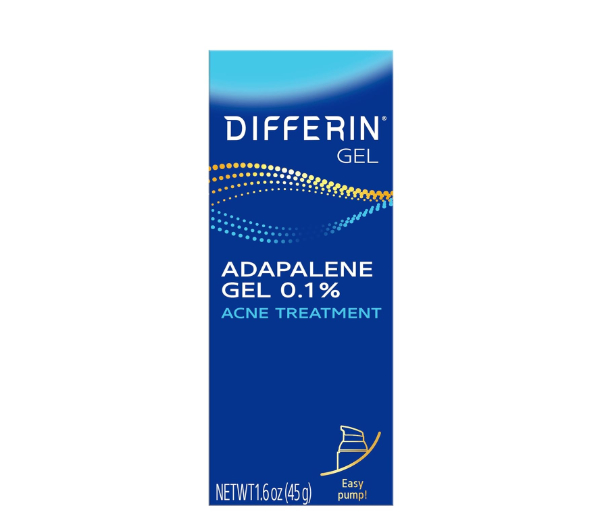
Differin Gel represents the most significant shift in over-the-counter acne care in decades. It utilizes Adapalene, a third-generation retinoid that was previously available only by prescription. Unlike traditional spot treatments that kill bacteria, Adapalene works at the cellular level to regulate skin cell turnover. Why It Matters: By preventing dead skin cells from clumping together and clogging your pores in the first place, it stops acne before it even forms, rather than just reacting to a pimple once it appears.
This product is best for those struggling with chronic whiteheads, blackheads, and hormonal congestion. It stands out because of its molecular stability; unlike older retinoids (like Tretinoin), Adapalene does not break down as easily when exposed to light or other skincare products. This makes it a more reliable "anchor" for a nightly routine. However, the honest trade-off is the "retinization" period - often called "the purge" - where skin may become dry, red, or experience a temporary uptick in breakouts during the first few weeks of use.
To be successful with Differin, you must view it as a marathon, not a sprint. It is not an overnight fix. Real-world context: because it increases your skin's sensitivity to UV radiation, a daily sunscreen is a mandatory requirement of this "ecosystem." If you aren't willing to commit to sun protection, the long-term damage could outweigh the acne-clearing benefits.
Adapalene specifically targets the RAR-beta and RAR-gamma receptors in the skin. Unlike older-generation retinoids that hit every receptor (causing massive irritation), Adapalene's high-fidelity targeting means it provides the same "pore-unclogging" benefits with significantly less surface-level inflammation. It is a precision tool rather than a hammer.
Best for Inflammatory Breakouts: La Roche-Posay Effaclar Duo Dual Action Treatment
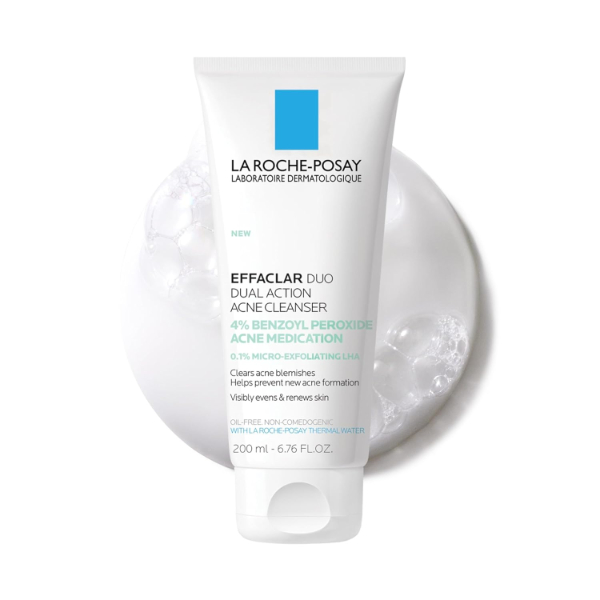
La Roche-Posay Effaclar Duo is a dual-threat treatment that combines 5.5% Benzoyl Peroxide (BP) with Lipo-Hydroxy Acid (LHA). While many BP treatments feel gritty and harsh, this formula stands out technically because it uses "micronized" benzoyl peroxide. Why It Matters: The BP particles are ground down to less than 10 microns in size. This allows the active ingredient to travel deeper into the pore to reach the bacteria, rather than sitting on top of the skin where it only causes redness and peeling.
This is best for users with "angry," red, or pus-filled pimples. The inclusion of LHA - a derivative of salicylic acid - provides a secondary benefit of gentle exfoliation to smooth out skin texture. It is a "Demystified Prosumer" favorite because it bridges the gap between high-strength clinical medicine and a cosmetically elegant lotion that can be worn under makeup or moisturizer without pilling.
The primary friction point here is the bleaching effect. Benzoyl Peroxide is a potent oxidizing agent; it will bleach your towels, pillowcases, and hair if you aren't careful. We recommend using white linens when this product is in your rotation. Furthermore, while the micronization reduces irritation, it can still be drying if used on the entire face every day; it is often most effective as a targeted treatment for specific flare-ups.
Standard BP crystals are often 50-100 microns, which is too large to fit into a human pore (approx. 20-40 microns). By reducing the particle size to under 10 microns, La Roche-Posay increases the "reactive surface area," meaning more of the medicine actually touches the bacteria inside the pore, leading to faster clearance of inflammation.
Best for Body and Deep Acne: PanOxyl Acne Foaming Wash 10% Benzoyl Peroxide
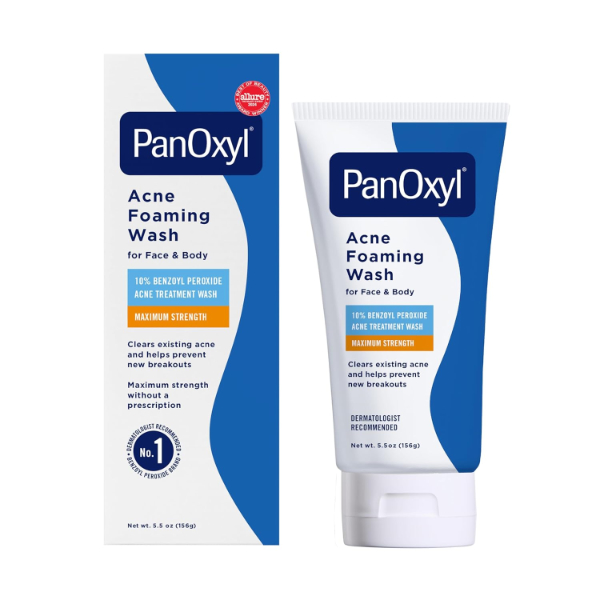
PanOxyl 10% is the "heavy lifter" of the acne world. It is the highest concentration of Benzoyl Peroxide available without a prescription. Because leave-on 10% BP can be incredibly irritating to facial skin, this foaming wash provides a technical workaround: "Short Contact Therapy." Why It Matters: By applying the high-strength medicine in a wash format and letting it sit for 1-2 minutes before rinsing, you kill the bacteria effectively without leaving a reactive chemical on your skin all day long.
This is the gold standard for "bacne" (body acne) and chest breakouts. The skin on the body is thicker and more resilient than the face, making it the perfect candidate for this maximum-strength formula. It stands out because it doesn't just treat existing pimples; the high concentration ensures that the oxygen-rich environment it creates in the pores is inhospitable to C. acnes bacteria, which are anaerobic (they die in the presence of oxygen).
The limitation is its intensity. If you have sensitive skin or a compromised moisture barrier, this wash will cause immediate stinging and peeling. It is a "functional" product, not a "luxury" one - it lacks the nice scents and textures of high-end skincare because its only goal is bacterial eradication. This is the choice for someone who has tried everything else and needs to bring out the big guns.
C. acnes bacteria thrive in zero-oxygen environments deep in your pores. PanOxyl works by introducing oxygen into the pore via the decomposition of benzoyl peroxide. Because it kills via oxygen rather than antibiotics, bacteria cannot develop a resistance to it, making it effective for long-term use without losing potency.
Best for Clogged Pores: The Ordinary Salicylic Acid 2% Solution
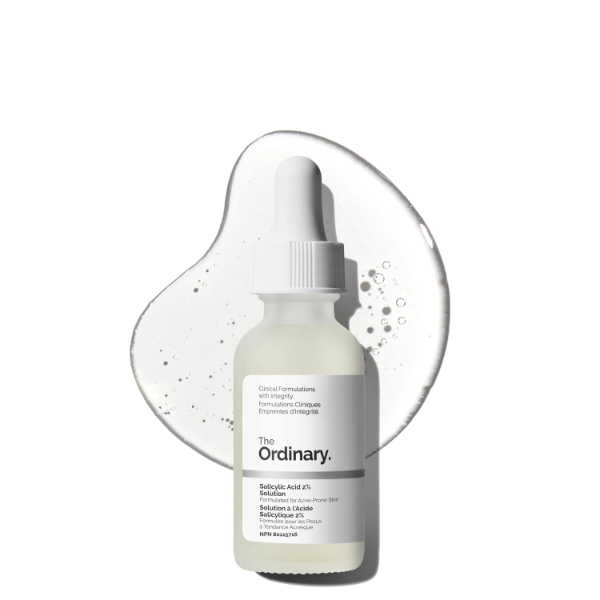
The Ordinary Salicylic Acid 2% is a minimalist Beta Hydroxy Acid (BHA) exfoliant. While Alpha Hydroxy Acids (AHAs) like glycolic acid are water-soluble and work on the surface, Salicylic Acid is oil-soluble (lipophilic). Why It Matters: This lipophilic nature allows the acid to bypass the surface oil of your skin and travel directly into the pore "lining." Once inside, it dissolves the "glue" holding dead skin cells together, effectively vacuuming out blackheads and sebaceous filaments.
This is the best choice for oily skin types and teenagers dealing with widespread "congestion" - the tiny bumps that aren't quite pimples but make the skin look uneven. It stands out due to its incredible price-to-performance ratio. By removing the expensive fragrances and packaging of luxury brands, it offers a high-fidelity chemical treatment at an accessible cost. It's a "no-fluff" solution for deep cleaning the skin's architecture.
The honest limitation is that Salicylic Acid can be very stripping. If your skin feels "squeaky clean" after use, you have likely over-exfoliated, which can trigger your skin to produce more oil in a panic. It is best used as a targeted serum or 2-3 times a week, rather than a daily soaking. Real-world context: users with an aspirin allergy should avoid this product, as salicylic acid is chemically related to acetylsalicylic acid (aspirin).
Because Salicylic Acid is lipophilic, it can penetrate the lipid (fat) layers of the skin. This allows it to work in environments where other acids fail. It lowers the pH of the pore, which not only exfoliates but also reduces the inflammation associated with "plugged" follicles.
Best for Emergency Spot Healing: Hero Cosmetics Mighty Patch Original
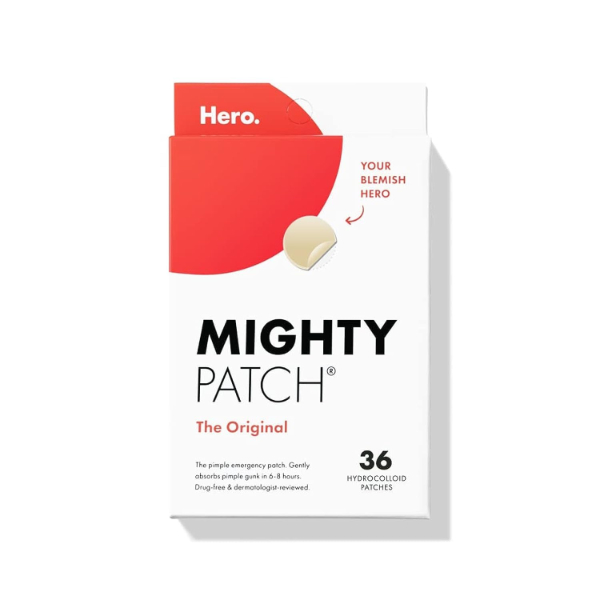
The Mighty Patch is a medical-grade hydrocolloid sticker that addresses the "picking" friction point. Most of us cannot resist the urge to squeeze a pimple, which often leads to scarring and secondary infections. Why It Matters: The hydrocolloid creates a protected, moist environment that speeds up healing. It uses "osmotic pressure" to draw out the gunk (whitehead) from the pimple into the patch, which you can physically see as a white spot on the sticker after a few hours.
This product stands out because of its simplicity and the quality of its adhesive. Unlike cheap "knock-off" patches, the Hero Cosmetics version uses a high-grade hydrocolloid that stays stuck through the night but doesn't rip off the healthy skin underneath. It is best for "whiteheads" that have come to a head. It will not do much for deep, cystic acne that hasn't reached the surface, because the hydrocolloid cannot pull fluid through several layers of healthy dermis.
The real-world benefit is twofold: it physically prevents you from touching the wound, and it absorbs the exudate (fluid) that causes a pimple to remain swollen and red. It's an "emergency" tool for your kit. The only downside is that they are single-use and can become expensive if you are trying to treat dozens of pimples at once; they are best reserved for those "problem" spots that need to go away before an event.
Hydrocolloid is a gel-forming material (carboxymethylcellulose). When applied to a pimple with a broken surface or thin skin, it creates a pressure gradient. This "capillary action" pulls the inflammatory fluid and pus into the patch matrix, turning it from a clear sticker into a white gel. This keeps the wound hydrated, which prevents the formation of hard scabs that lead to scars.
How We Chose These Products
We evaluated acne treatments based on three core pillars: Clinical Evidence, Delivery Stability, and Skin Barrier Safety. We prioritized products that contain the most studied active ingredients in dermatology: Adapalene, Benzoyl Peroxide, and Salicylic Acid. We specifically looked for products that minimized "jargon-based marketing" and instead provided high-fidelity data on concentrations and pH levels. Each product was also vetted for its "user friction" - the likelihood of a consumer being able to integrate it into a real-world routine without needing a degree in chemistry.
Comparison Overview
| Product | Active Ingredient | Primary Benefit | Target Acne Type |
|---|---|---|---|
| Differin Gel | Adapalene 0.1% | Regulates cell turnover | Comedonal / Preventative |
| Effaclar Duo | 5.5% Benzoyl Peroxide | Kills bacteria in-pore | Inflammatory / Red spots |
| PanOxyl Wash | 10% Benzoyl Peroxide | Max strength kill | Body / Severe acne |
| The Ordinary BHA | 2% Salicylic Acid | Deep pore exfoliation | Blackheads / Oily skin |
| Mighty Patch | Hydrocolloid | Fluid absorption | Surface whiteheads |
Buying Guide: What to Look For
- Concentration vs. Irritation: Higher isn't always better. 2.5% Benzoyl Peroxide is often just as effective as 10% for facial acne but with 70% less irritation. Start low and go slow.
- Molecular Weight and Penetration: Look for "micronized" or "encapsulated" ingredients. These are technically superior because they bypass the skin's surface to work where the problem actually starts.
- Shelf Stability: Retinoids (like Differin) and Vitamin C are notoriously unstable. Look for airless pumps or opaque tubes rather than jars to ensure the chemical doesn't degrade before you finish the bottle.
- pH Balance: Chemical exfoliants (Salicylic Acid) require a low pH (usually 3.0 to 4.0) to actually work. If a product is too "neutral," the acid becomes inactive and won't exfoliate anything.
General Pro / Cons
| Strengths (Pros) |
|---|
| Clinically proven ingredients backed by dermatologists. |
| Targeted delivery (micronization) reduces surface damage. |
| High efficacy for specific acne types (hormonal vs. bacterial). |
| Accessible price points compared to prescription costs. |
| Stops the "picking cycle" with physical protection. |
| Regulates skin health for long-term prevention. |
| Non-antibiotic options prevent bacterial resistance. |
| Weaknesses (Cons) |
|---|
| Can cause initial "purging" or temporary worsening. |
| Often causes significant dryness and peeling. |
| Potential for bleaching hair and fabrics (BP products). |
| Requires strict adherence to daily sunscreen use. |
| Can be incompatible with other active ingredients. |
| Takes 4-12 weeks to show full results (Differin). |
| Potential for over-exfoliation and barrier damage. |
Final Summary
The "best" acne treatment is not a single product, but a strategy that matches the chemical tool to the biological problem. For chronic prevention, Differin Gel is the most powerful preventative tool available without a doctor's visit. For active, red inflammation, La Roche-Posay Effaclar Duo provides a micronized delivery of medicine that actually reaches the source of the infection. By focusing on these clinically-validated actives and respecting your skin's moisture barrier, you can move past the cycle of breakouts and achieve consistent clarity.
Aggregate rating of the products reviewed: 4.7 out of 5.