
Best Trekking Poles for Hiking of 2026
An expert analysis of high-performance stability tools designed to reduce joint impact, improve uphill efficiency, and provide four-point contact on technical terrain.
Introduction
Trekking poles are often misunderstood as "walking sticks for the elderly," but in reality, they are sophisticated pieces of kinetic engineering. By transitioning your body from a two-legged gait to a four-point contact system, you effectively distribute the weight of your pack and body across more muscle groups. This reduces the compressive force on your knees - specifically the patellofemoral joint - by up to 25% during downhill descents. For a hiker carrying a 30-pound pack, that can mean saving tons of cumulative pressure over a single day of hiking.
When selecting a pole, you are primarily choosing between two material philosophies: Carbon Fiber and Aluminum 7075. Carbon fiber is prized for its high strength-to-weight ratio and its ability to dampen vibrations (the "sting" you feel when the pole hits hard rock). However, it is brittle under lateral stress. Aluminum, particularly the T6 heat-treated 7075 grade, is more durable and will bend rather than snap, making it the preferred choice for rugged, off-trail scrambling where a gear failure could be catastrophic.
Best Overall Performance: Black Diamond Alpine Carbon Cork
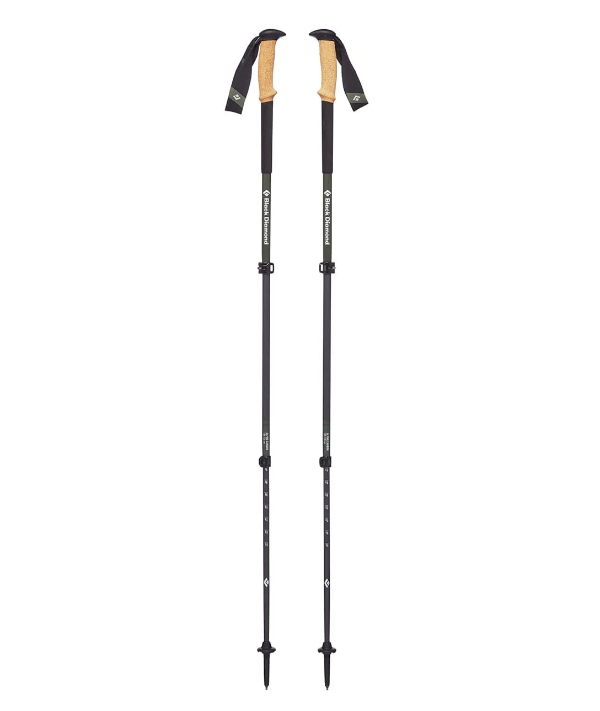
The Black Diamond Alpine Carbon Cork is the industry benchmark for a versatile, four-season trekking pole. It utilizes 100% carbon fiber shafts, which provides an exceptionally stiff feel that doesn't "wobble" when you lean your full weight into it. The standout feature is the natural cork grip. Why it matters: Unlike foam or rubber, cork conforms to the shape of your hand over time and naturally wicks away sweat, preventing the friction-based blisters that can end a trip early.
This pole features the FlickLock Pro adjustment system made of stainless steel. Many cheaper poles use plastic levers that can crack in sub-zero temperatures, but the steel FlickLock is designed to handle extreme thermal expansion and contraction without losing its grip. It is ideal for year-round hikers who transition from summer dirt trails to winter snowshoeing, as it includes both trekking and powder baskets.
The primary downside is the weight relative to "ultralight" specific poles. Because it uses three thick sections of carbon and metal locks, it isn't the lightest on the market. Furthermore, while the cork is premium, it requires a "break-in" period. If you have very small hands, the grip diameter might feel slightly bulky initially. However, for a pole that balances durability with luxury, this is the gold standard.
Carbon fiber has a higher Internal Damping Capacity than aluminum. Why it matters: When a metal pole strikes granite, the high-frequency vibrations travel directly into your wrist and elbow (leading to "hiker's elbow"). Carbon fiber's weave structure absorbs these micro-shocks at the material level, protecting your joints over long distances.
Best Folding Design: LEKI Makalu FX Carbon
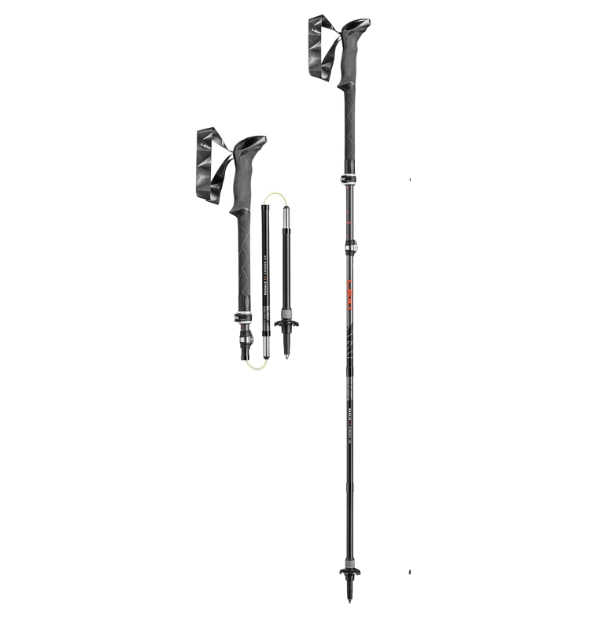
The LEKI Makalu FX Carbon solves the "space" problem for travelers and hikers who use public transit. Instead of the traditional telescoping design, this pole uses an internal high-performance tension cord (Kevlar-reinforced) to "snap" into place like a tent pole. Why it matters: This allows the pole to collapse to just 15 inches, meaning it fits inside most standard daypacks rather than strapping to the outside where it can snag on branches.
Technically, LEKI's Aergon Air grip is a masterpiece of ergonomics. It features a hollow-core design to save weight and a rubberized head with a slight downward angle. Why it matters: This angle keeps your wrist in a "neutral" position, reducing the strain on the carpal tunnel during long ascents. The Speed Lock 2 Plus system allows for 20cm of adjustment on the top section, giving you the benefit of a fixed-length pole's stability with the flexibility of a telescoping one.
The trade-off for this convenience is the number of moving parts. Folding poles have more failure points than simple three-section telescoping poles. If the internal cord loses tension after years of use, the pole can feel "loose." Additionally, LEKI poles use a proprietary "Trek Basket" system, so replacing a lost basket often requires ordering parts directly from the manufacturer rather than picking up a generic version at a local gear shop.
LEKI's Speed Lock 2 Plus is tested to provide over 70kg of holding force per pole. Why it matters: This prevents the pole from "slipping" and shortening when you apply high vertical pressure, which is critical for safety when navigating steep downhill switchbacks with a heavy load.
Best Ergonomic Value: Black Diamond Trail Ergo Cork
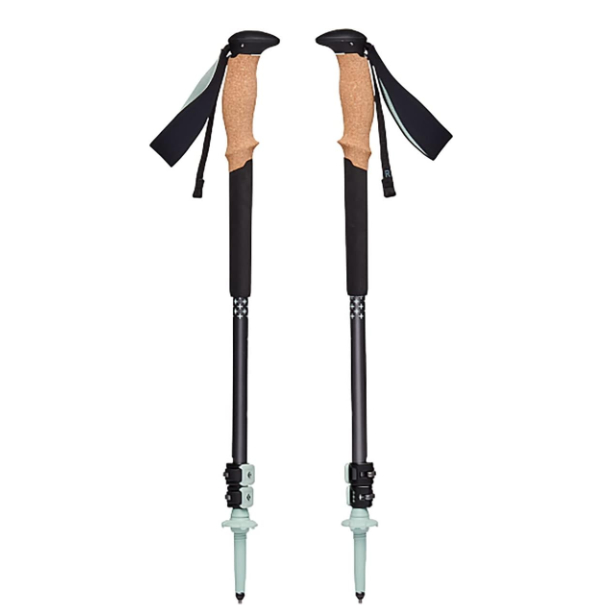
The Trail Ergo Cork is the practical choice for the "everyday" hiker. Unlike the Alpine Carbon, this pole is constructed from Aluminum 7075. Why it matters: Aluminum is more "ductile" than carbon. If you get a pole stuck between two rocks and trip, an aluminum pole will likely bend, whereas a carbon pole might shatter. A bent pole can often be straightened enough to get you back to the trailhead; a shattered one cannot.
The "Ergo" in the name refers to the 15-degree corrective angle in the cork grip. This mimics the hand's natural resting position. By tilting the grip forward, the pole tip hits the ground further ahead of your body with less wrist extension. This is an empathetic design choice for hikers with pre-existing wrist sensitivity or those who find standard straight poles cause their hands to cramp after five or six miles.
Honest limitation: This is an aluminum pole, so you will feel more "buzz" or vibration than you would with carbon. It is also noticeably heavier (about 18 oz per pair). However, for the hiker who values reliability and ergonomic comfort over "gram-counting" ultralight specs, this provides the best longevity-to-price ratio in the Black Diamond lineup.
7075-T6 is an aerospace-grade aluminum alloy. Why it matters: It has a high fatigue strength, meaning it can withstand thousands of "flex cycles" before the metal begins to weaken. This makes it much safer for high-mileage hikers who traverse uneven, rocky terrain.
Best Budget Carbon: Cascade Mountain Tech Carbon Fiber Quick Lock
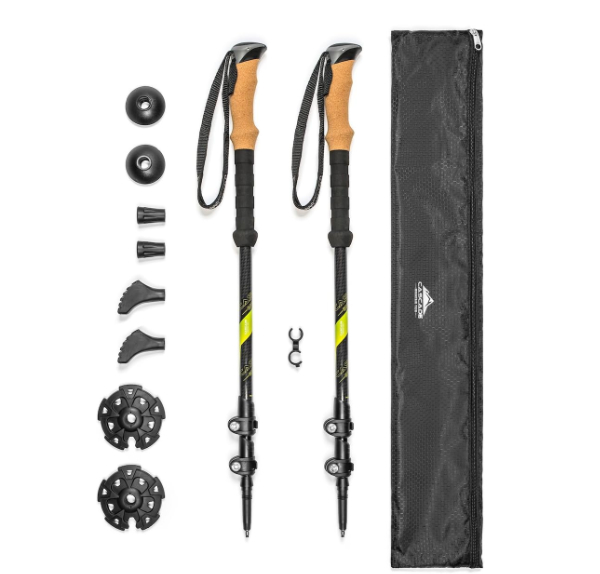
For years, this pole has been the "disruptor" in the trekking pole market. While premium carbon poles often cost upwards of $150, Cascade Mountain Tech offers a 100% carbon fiber pole for a fraction of that. Why it matters: It allows entry-level hikers to experience the weight savings (approx. 16 oz per pair) and vibration dampening of carbon fiber without a massive financial barrier.
Technically, these poles use a standard "3K Carbon" weave and a simple plastic Quick Lock system. They include a staggering array of accessories: rubber tips for pavement, boot tips for hard surfaces, and both sand and snow baskets. For the occasional weekend hiker or someone doing their first 14er, this kit provides everything needed to handle various ecosystems in one box.
The "honest trade-off" here is quality control and component longevity. The levers are plastic rather than metal, and the cork grips are a "cork-composite" (cork mixed with EVA foam) rather than solid natural cork. This means they won't wick moisture as effectively as the Orvis or LEKI grips. If you are an aggressive "power hiker" who puts high stress on your gear, you may find the locks need tightening more frequently than premium models.
3K carbon fiber means there are 3,000 filaments per "tow" or bundle. Why it matters: This weave provides a balanced ratio of lateral stiffness to weight, ensuring the pole doesn't feel "mushy" when planting it in soft mud or scree.
Best for Ultralight Backpacking: Gossamer Gear LT5 Three-Piece Carbon
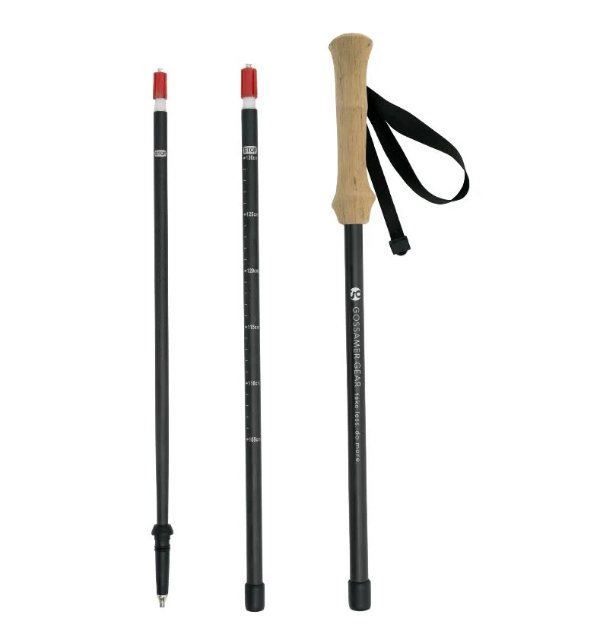
The Gossamer Gear LT5 is designed for the "gram-counter" - hikers who treat every ounce as a burden. Weighing in at just 4.9 ounces per pole, they are among the lightest adjustable carbon fiber poles ever manufactured. Why it matters: Over a 20-mile day, you will swing your arms roughly 30,000 times. Reducing the "swing weight" by even two ounces per arm significantly lowers the caloric expenditure and shoulder fatigue associated with long-distance trekking.
Instead of external lever locks, the LT5 uses an internal "Twist Lock" system with a minimal EVA foam grip. Why it matters: External levers add aerodynamic drag and weight; the twist lock keeps the shaft completely smooth. This makes them ideal for "thru-hikers" on the PCT or AT who prioritize efficiency over all else. The EVA foam is high-density, meaning it won't compress or disintegrate over a single season like cheaper foams.
The downside is high fragility. These are thin-walled carbon tubes. They are not meant for heavy-duty alpine scrambling or "post-holing" through deep snow where they could be torqued sideways. Furthermore, twist locks are notorious for freezing shut in winter or jamming if fine silt gets inside the mechanism. This is a specialized tool for the experienced hiker who knows how to treat gear with a gentle touch.
Swing weight is the Moment of Inertia of the pole. Why it matters: A lower moment of inertia means it takes less muscular force from your deltoids and biceps to accelerate the pole forward. For long-distance hiking, this translates to improved metabolic efficiency.
How We Chose These Products
Our evaluation criteria were based on the Safety-Stability Matrix. We analyzed poles based on their Max Load Capacity (how much they hold before collapsing), Locking Reliability (how often they need adjustment), and Grip Ergonomics. We prioritized products that offer replaceable tips and baskets, as "ecosystem sustainability" is a key factor for prosumer gear. We explicitly excluded poles with "anti-shock" springs in the handle, as modern technical research shows these actually decrease stability on technical terrain by reducing the hiker's "ground feel."
Comparison Overview
| Model | Material | Weight (Pair) | Lock Type | Grip Material |
|---|---|---|---|---|
| Black Diamond Alpine Carbon | Carbon Fiber | 17.1 oz | Metal Lever | Natural Cork |
| LEKI Makalu FX | Carbon Fiber | 17.9 oz | Folding + Lever | Aergon Air (Rubber/Plastic) |
| Black Diamond Trail Ergo | Aluminum 7075 | 18.0 oz | Plastic Lever | Natural Cork (15?) |
| Cascade Mountain Tech | Carbon Fiber | 16.0 oz | Plastic Lever | Cork/EVA Composite |
| Gossamer Gear LT5 | Carbon Fiber | 9.8 oz | Internal Twist | EVA Foam |
Buying Guide: What to Look For
- Shaft Material: Choose Carbon Fiber for comfort and weight, but Aluminum 7075 if you are heavy on your gear or hike in extremely rocky "scree" fields.
- Grip Choice: Cork is the premium option for hot weather and blister prevention. EVA Foam is better for cold weather as it provides better insulation for your hands.
- Pole Length: When your pole tip is on the ground, your elbow should form a 90-degree angle. Ensure the pole you choose has an adjustment range that accommodates your height.
- Locking Mechanisms: Lever locks are generally superior to twist locks for ease of use with gloves and overall long-term reliability.
General Pro / Cons
| Pro | Con |
|---|---|
| Reduces knee strain by up to 25% on descents. | Adds weight to your total pack load when not in use. |
| Improves balance on river crossings and mud. | Requires "swing energy" from your upper body. |
| Can be used to pitch many "ultralight" trekking pole tents. | Tips can get stuck in rocks, causing potential shaft breakage. |
| Engages your core and arms for a full-body workout. | Can disrupt the natural rhythm of your stride on flat ground. |
| Provides a defensive barrier against aggressive wildlife. | Can cause environmental "trail scarring" on soft soil. |
| Increases pace during uphill climbs by using arm power. | Twist-lock models can be difficult to adjust in freezing rain. |
Final Summary
Investing in a high-quality pair of trekking poles is an investment in your long-term mobility. For the dedicated enthusiast who wants the best dampening and comfort, the Black Diamond Alpine Carbon Cork is the undisputed winner. If portability is your primary concern, the LEKI Makalu FX Carbon offers a folding design that is second to none. Regardless of your choice, remember that the most technical pole in the world is only as good as its lock tension - always check your FlickLocks before heading out. Aggregate rating of the products reviewed: 4.64 out of 5.