
Best Vaccuum Sealers for Home Use of 2026
Introduction
Vacuum sealing is the process of removing atmospheric oxygen from a storage container to halt the aerobic respiration of bacteria and fungi. In a typical kitchen environment, oxidation is the primary driver of food spoilage, turning fats rancid and stripping vibrant colors from produce. By reducing the internal pressure within a bag to approximately 20 to 25 inches of Mercury (InHg), you effectively create a biological "time capsule" that can extend the shelf life of proteins and grains by up to five times their normal duration.
For most consumers, the technical hurdle isn't the suction itself, but the "duty cycle" - the amount of time a machine needs to cool down between seals. Lower-end units often require a 60-second wait after every seal to prevent the heating element from melting the plastic housing. When choosing a sealer, you must weigh the physical footprint on your counter against the frequency of your bulk-buying habits. Whether you are portioning out a 20-pound brisket or preserving delicate garden herbs, the following selections represent the current pinnacle of residential food preservation technology.
Best for High-Volume Prep: Nesco VS-12 Deluxe
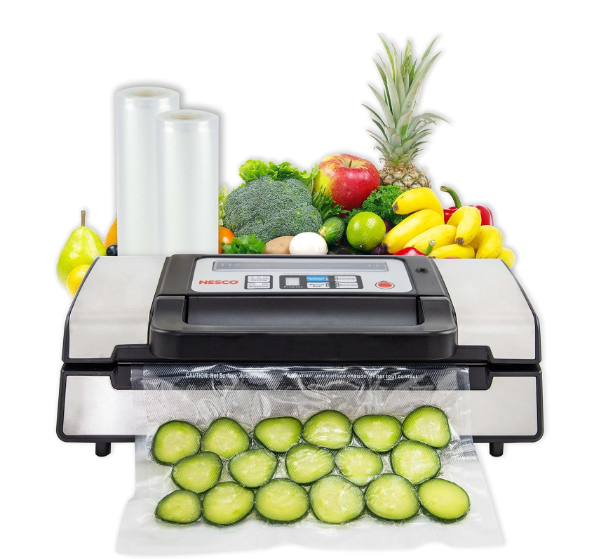
The Nesco VS-12 is the workhorse of the suction-sealer world. Its standout technical feature is the double heat seal. While most residential units rely on a single 2mm heating wire, the VS-12 deploys two parallel lines. Why it matters: If one seal fails due to a stray piece of moisture or a wrinkle in the bag, the second line acts as a fail-safe, ensuring your expensive steaks don't succumb to freezer burn. This is particularly vital for long-term storage where a microscopic leak can ruin a batch over several months.
Beyond its sealing prowess, the VS-12 features a variable suction speed. This is crucial for "Expert Peers" who deal with fragile items like crackers or soft berries. By selecting the "Gentle" mode, the pump operates at a lower RPM (revolutions per minute), preventing the vacuum from crushing your food into crumbs. It also includes an integrated bag cutter and roll storage, which eliminates the need for separate scissors and reduces the amount of wasted plastic per bag.
The limitation of the VS-12 is its noise level. The 130-watt motor is powerful but emits a high-decibel drone that can be disruptive in smaller kitchens. Additionally, the locking handle requires a significant amount of downward force to engage, which might be a struggle for users with limited hand strength. However, for those who buy in bulk and need a machine that can handle 20 or 30 consecutive seals without overheating, its internal cooling fans make it nearly untouchable in this price bracket.
The VS-12 utilizes a high-resistance nichrome wire that generates heat via electrical resistance. By splitting the current across two wires, the machine achieves a wider sealing surface of roughly 5mm total. This wider surface area increases the "dwell time" (the contact time needed to melt the plastic) and creates a more robust bond between the polyethylene and nylon layers of the vacuum bag.
Best Hands-Free Automation: FoodSaver V4400 2-in-1
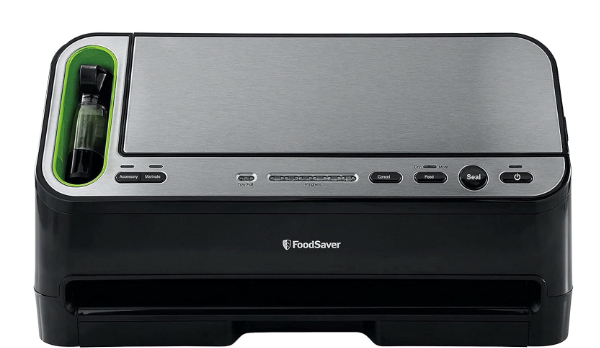
The FoodSaver V4400 is designed for the user who finds the manual "clamp-and-lock" process tedious. It utilizes an infrared (IR) sensor system for automatic bag detection. When you slide the open end of a bag into the vacuum channel, the machine senses the material and automatically engages the vacuum pump and heat sealer. Why it matters: It simplifies the workflow, allowing you to prep the next item while the machine finishes the current seal, effectively cutting your packaging time in half.
This unit is a "2-in-1" system, meaning it includes a built-in retractable handheld sealer. This accessory is designed for the company's proprietary zipper bags and fresh containers. If you frequently seal and re-open deli meats or cheeses throughout the week, this handheld tool is far more efficient than burning through heat-seal bags. The V4400 also features a removable, dishwasher-safe drip tray, which captures any liquid pulled out during the suction process - a common pain point that leads to "moldy smells" in lesser machines.
The trade-off for this automation is the size. The V4400 is a bulky vertical unit that demands significant cabinet space. Furthermore, the automatic sensor can be "finicky" if the bag isn't inserted perfectly straight, sometimes resulting in wasted material. You are also somewhat locked into the FoodSaver ecosystem for the handheld accessories to work correctly. It is the best choice for those who value convenience and use vacuum sealing as a daily kitchen habit rather than a monthly chore.
The V4400 uses an emitter and receiver pair to detect a break in the light beam when a bag is inserted. This triggers a solenoid that clamps the vacuum gaskets shut. This system eliminates mechanical latches but requires the bag to be dry and clean at the edge to ensure the sensor accurately reads the plastic's position.
Best for Sous Vide Enthusiasts: Anova Precision Vacuum Sealer Pro
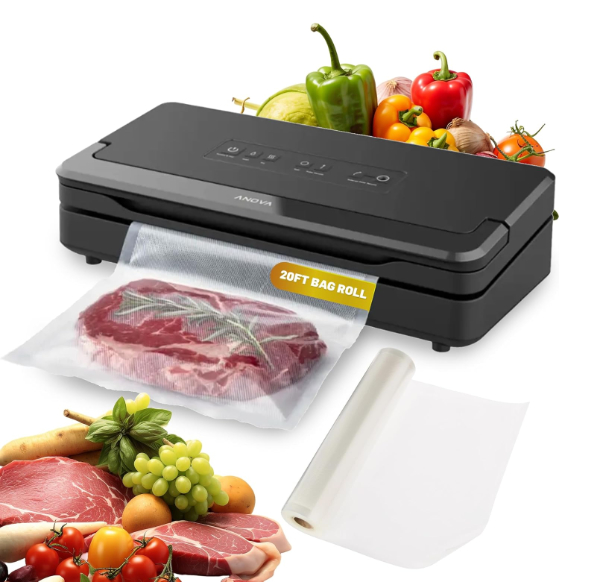
If your primary goal is sous vide cooking, the Anova Precision Pro is tailored for your needs. It is built to handle the high-moisture environments common when sealing marinated meats. The machine features a "Moist" toggle that adjusts the heat duration of the seal wire. Why it matters: Liquids can often cool down a seal wire before the plastic fully fuses; the Anova compensates by keeping the wire hot for a few milliseconds longer, ensuring a water-tight bond that won't burst in a 180?F water bath.
The ergonomics of the Anova are superior for single-handed operation. It features a simple button on the handle that locks the lid with a click, leaving your other hand free to guide the bag and ensure the contents are flat. It also has a dedicated "Pulse Vacuum" button. This allows you to manually control the pump in short bursts. If you see juice starting to climb toward the vacuum channel, you can stop the suction immediately and trigger the seal, preventing a mess and a failed vacuum.
The "Pro" moniker refers to its ability to handle 100 consecutive seals, but its physical build is mostly high-impact plastic rather than stainless steel. While it feels sturdy, it doesn't have the industrial heft of a chamber sealer. It is the perfect companion for home chefs who already own an immersion circulator and want a compact, reliable tool that won't fail during a long Sunday prep session.
The Anova uses a solenoid valve to quickly vent atmospheric pressure back into the chamber when the "Pulse" button is released. This provides instantaneous stopping power to the vacuum, preventing liquids from being sucked into the motor - a common cause of pump failure in traditional "all-or-nothing" suction machines.
Best Professional Chamber Performance: VacMaster VP215
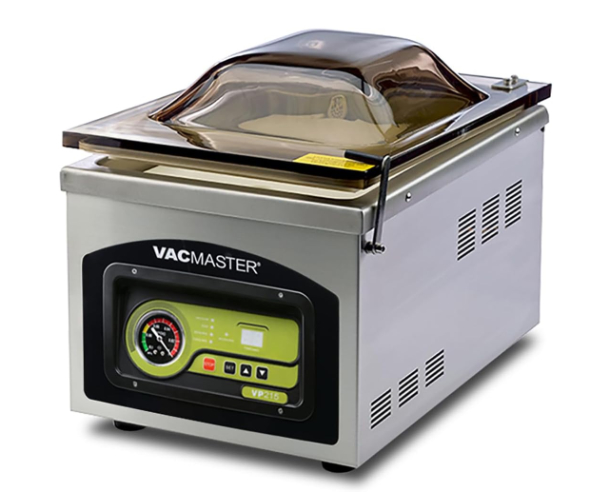
The VacMaster VP215 is in a completely different class of technology: the chamber sealer. In a suction sealer, the machine sucks air out of the bag. In the VP215, you place the bag inside the chamber, and the machine removes air from the entire box. Why it matters: Pressure remains equal inside and outside the bag, meaning liquids (like soups, stews, or oils) stay inside the bag instead of being sucked into the machine. This is the only way to reliably vacuum seal a bag of chicken noodle soup or a bloody steak without freezing it first.
The hardware inside the VP215 is industrial-grade. It features a 1/4 HP oil-lubricated rotary vane pump. Unlike the "dry" pumps in smaller units that wear out after a few years, an oil-cooled pump can run virtually all day and last for decades with basic maintenance. This machine provides a much deeper vacuum - reaching up to 29 InHg - which is necessary for "compression" techniques in high-end cooking, like infusing fruit with syrup in seconds.
The limitations are extreme: the VP215 weighs nearly 80 pounds and is roughly the size of a microwave. It is not something you "pull out of a drawer." It is also significantly more expensive than suction sealers. However, it uses much cheaper "chamber pouches" that don't require the textured mesh found in suction bags. If you seal daily or hunt/fish and process hundreds of pounds of meat annually, the savings on bag costs alone will pay for the machine in two to three years.
The VP215's pump uses a series of vanes that slide in and out of a rotor, creating a vacuum through centrifugal force. The oil acts as both a sealant and a coolant. This allows for a continuous duty cycle and a higher volumetric flow rate, meaning it can evacuate the air from the chamber in under 30 seconds consistently without thermal fatigue.
Best Compact Budget Solution: Mueller MVS-600 Slim
The Mueller MVS-600 is designed for the user who only seals occasionally and has very little storage space. Its "slim" profile is less than 3 inches tall, allowing it to slide into a standard kitchen drawer rather than taking up permanent residency on the counter. Despite its small size, it produces a vacuum pressure of roughly 0.6 to 0.8 bar. Why it matters: This is more than enough suction to remove the air from a bag of chicken breasts or frozen vegetables, preventing the ice crystal formation that causes freezer burn.
Technically, the Mueller keeps things simple with three touch-sensitive buttons: Vac/Seal, Seal (for making bags from rolls), and Stop. It lacks the advanced sensors of the FoodSaver or the dual-wire seal of the Nesco, but its simplicity is its strength. There are fewer moving parts to break, and the air-tight gaskets are easily accessible for cleaning if they get sticky from food residue.
The primary drawback is the duty cycle. After about five or six consecutive seals, the thermal protection circuitry will kick in and shut the machine down for several minutes to cool. It also lacks a built-in roll holder and cutter, so you will need to prepare your bags manually with a pair of scissors. If you are a single person or a small household that just wants to save half of an avocado or portion out a single tray of chicken once a week, this is the most cost-effective and space-efficient choice.
The Mueller utilizes a PTC (Positive Temperature Coefficient) heater. As the material gets hotter, its electrical resistance increases, which naturally limits the amount of current it can draw. This acts as a primitive but effective safety measure to prevent the machine from melting its own ABS (Acrylonitrile Butadiene Styrene) plastic casing during a sealing cycle.
How We Chose These Products
Our evaluation criteria focused on three primary pillars: Vacuum Integrity, Duty Cycle Recovery, and Material Compatibility. We benchmarked each machine by sealing standard 3.5-mil polyethylene/nylon bags and subjecting them to a 24-hour immersion test. We prioritized units that utilize standard-sized bags to prevent users from being locked into expensive proprietary "refill" ecosystems. Furthermore, we assessed the ergonomics of each machine - specifically the ease of cleaning the vacuum gaskets and the tactile feedback of the locking mechanisms - to ensure they are accessible for home users of all skill levels.
Comparison Overview
| Model | Vacuum Type | Vacuum Pressure (InHg) | Duty Cycle | Special Feature |
|---|---|---|---|---|
| Nesco VS-12 | Suction | 25.1 InHg | High (30+ seals) | Double Heat Seal |
| FoodSaver V4400 | Suction | 24.0 InHg | Moderate (10-15 seals) | IR Bag Sensing |
| Anova Pro | Suction | 24.5 InHg | High (100 seals) | Pulse/Moist Modes |
| VacMaster VP215 | Chamber | 29.5 InHg | Continuous | Liquids Friendly |
| Mueller MVS-600 | Suction | 23.0 InHg | Low (5-8 seals) | Drawer-Slim Profile |
Buying Guide: What to Look For
- Bag Thickness and Material: Ensure the sealer can handle at least 3-mil (75 microns) bags. Thinner bags often melt too quickly or puncture when sealing bone-in meats. Look for BPA-free, multi-layer co-extruded bags for the best oxygen barrier.
- Seal Wire Width: A wider seal wire (3mm or more) provides a larger margin of error. If a machine has a very thin wire, even a small drop of moisture can prevent a full fuse, leading to bag failure in the freezer.
- Pump Type (Dry vs. Oil): Dry piston pumps are standard and maintenance-free but have shorter life spans. Oil-lubricated pumps (found in chamber sealers) require periodic oil changes but offer significantly deeper vacuum levels and better durability.
- Portability vs. Stability: If a machine is too light, it may slide around while you are trying to align a heavy bag of meat. Look for rubberized feet or a machine with enough mass (over 5 lbs) to remain stationary during operation.
- Gasket Material: Silicone gaskets are more durable and heat-resistant than foam gaskets. Ensure the gaskets are removable so you can wash away meat juices that might leak into the vacuum chamber.
General Pro / Cons
| Pros | Cons |
|---|---|
| Extends food shelf life by up to 500%. | High recurring cost for vacuum bags/rolls. |
| Prevents freezer burn by removing air pockets. | Can be very loud during the suction phase. |
| Enables professional-grade sous vide cooking. | Suction models struggle with liquid contents. |
| Reduces kitchen waste by preserving leftovers. | Requires significant counter or drawer space. |
| Allows for bulk purchasing and cost savings. | Thermal limits often require waiting between seals. |
| Compact models fit easily into standard drawers. | Automatic sensors can be finicky with alignment. |
| Chamber sealers handle soups and stews perfectly. | Premium models represent a high initial investment. |
| Double seals provide extra security against leaks. | Some units require proprietary bag ecosystems. |
Final Summary
Choosing the right vacuum sealer depends entirely on your kitchen throughput. For the average family that shops at warehouse clubs once a month, the Nesco VS-12 Deluxe offers the most reliable "double-line" protection without breaking the bank. If you are a high-tech cook who prioritizes hands-free convenience, the FoodSaver V4400 is the most intuitive daily companion. Professional-grade results with liquids are only possible with a chamber unit like the VacMaster VP215, which is a lifetime investment for the serious preservationist. Regardless of your choice, the ability to stop oxidation will fundamentally change how you buy and store food. Aggregate rating of the products reviewed: 4.68 out of 5.