
Best Vlogging Cameras of 2026
A technical evaluation of the top-performing cameras designed for content creators, focusing on autofocus reliability, thermal management, and sensor fidelity.
Introduction
For most creators, the leap from a smartphone to a dedicated vlogging camera is driven by a single frustration: the "smartphone look." While mobile devices use heavy artificial sharpening and software-based background blur, a dedicated camera uses physical optics and larger sensors to create organic depth and professional-grade low-light performance. The friction point for many is the perceived complexity; the fear that a "real" camera will be too heavy to carry or too difficult to set up, leading to a return to the convenience of the phone.
Modern vlogging cameras have solved this by prioritizing "Zero-Effort" features like specialized AI subject tracking and high-quality internal microphones. When we evaluate these tools, we look beyond megapixels. We focus on thermal endurance (how long it can record before overheating), bit-depth (how much color information the file holds), and IBIS (In-Body Image Stabilization). These technical pillars are what prevent a video from looking like a shaky, amateur home movie and turn it into something a viewer will actually watch until the end.
Best Premium Full-Frame: Sony ZV-E1
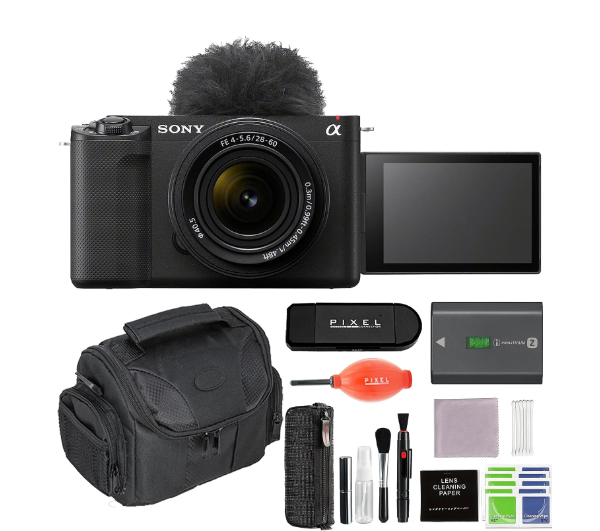
The Sony ZV-E1 is currently the most powerful dedicated vlogging tool on the market, packing a 12.1-megapixel full-frame sensor into a remarkably small body. Unlike high-resolution photography cameras, this sensor features larger individual pixels (8.4 microns). Why It Matters: Larger pixels act like bigger buckets for light. This allows the ZV-E1 to see in near-darkness without the "grainy" digital noise that ruins smartphone footage, making it the gold standard for late-night street vlogs or dim indoor settings.
Technically, it stands out due to its dedicated AI processing unit. This chip handles "Auto Framing," which uses the camera's resolution to crop in and follow you around the frame even if the camera is sitting on a tripod. It effectively acts as a virtual cameraman. For the solo creator, this eliminates the setup complexity of having to perfectly time your movements; the camera simply adjusts to you in real-time with uncanny smoothness.
The honest trade-off here is the thermal limit and price. Because the body is so compact, the heat generated by the full-frame sensor has nowhere to go. If you are recording long-form podcasts in a hot room at 4K 60p, you will likely hit an overheat shutdown after 30-40 minutes. It is a tool designed for "clip-based" vlogging - short, high-quality bursts - rather than indefinite streaming.
Standard cameras record in 8-bit, which captures roughly 16 million colors. The ZV-E1 records in 10-bit, capturing over 1 billion colors. Why It Matters: This prevents "banding" in the sky or on walls. When you edit your video, you have 64 times more color data, allowing you to brighten shadows or change colors without the image "falling apart" into digital blocks.
Best for Active Movement: DJI Osmo Pocket 3
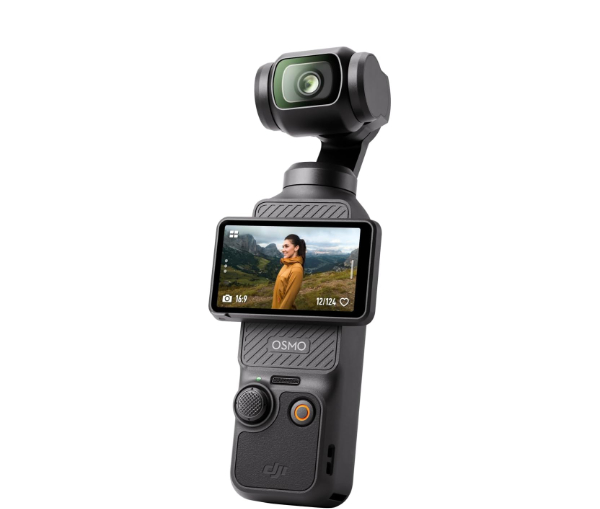
The DJI Osmo Pocket 3 addresses the "shaky footage" friction point better than any other device. While most cameras use electronic stabilization (which crops the image and can look "jittery"), the Pocket 3 uses a physical, 3-axis mechanical gimbal. Why It Matters: The camera lens is literally floating on motors that counteract your hand movements. This results in "Steadicam" quality footage even if you are running or walking over uneven terrain, without sacrificing any image quality to digital cropping.
Internally, DJI upgraded this version to a 1-inch CMOS sensor. This is roughly 4 times larger than the sensor found in most standard smartphones. This means that despite its tiny size, it can handle high-contrast scenes - like a sunset vlog - without blowing out the highlights into pure white or losing the shadows to pure black. The flip-up 2-inch OLED screen is also a major ergonomic win; rotating it sideways instantly powers the camera on and sets it to 16:9 widescreen mode.
The limitation is the fixed focal length. You cannot change the lens, so you are stuck with a moderately wide view. While this is perfect for holding the camera at arm's length to talk to it, it is not the right tool if you want to zoom in on distant subjects. It is a specialized tool for the "on-the-go" creator who wants the smallest possible footprint with the highest possible stability.
The Pocket 3 supports D-Log M, a "flat" color profile that preserves a high dynamic range. Why It Matters: Out of the camera, the footage looks grey and dull. However, this profile captures more information in the brightest and darkest parts of the image. When you apply a "LUT" (color filter) in editing, you get a professional cinematic look that isn't possible with standard "vivid" smartphone modes.
Best Pocket Compact: Sony ZV-1 II
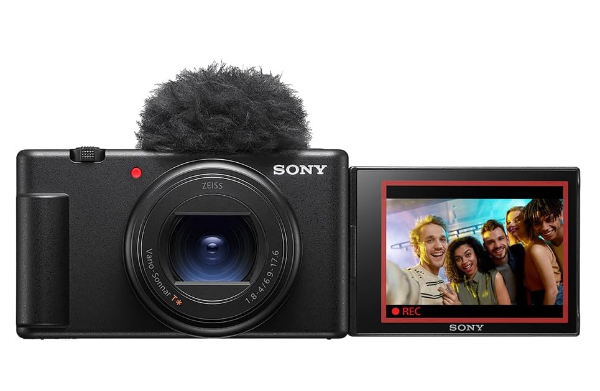
The Sony ZV-1 II is designed for the creator who wants "Point and Shoot" simplicity without the bulk of interchangeable lenses. It features a fixed 18-50mm equivalent lens. Why It Matters: The 18mm wide-angle end is crucial for vlogging; it allows you to fit your head and a generous amount of the background into the frame while holding the camera at a comfortable distance. Older compact cameras were often too "zoomed in," forcing you to use a selfie stick just to get a decent shot.
One of its standout practical features is the "Product Showcase" mode. This is a specific autofocus setting that tells the camera to prioritize objects held up to the lens rather than sticking to your face. This solves a common friction point for beauty or tech reviewers where the camera refuses to stop focusing on the person's eyes. It transitions focus instantly and accurately, which keeps the viewer focused on the product rather than a blurry lens hunt.
However, the ZV-1 II lacks a physical lens stabilization system (Optical SteadyShot) on the wide end, relying instead on "Active" electronic stabilization. This applies a crop to your image, meaning the 18mm lens becomes more like a 21mm lens when stabilization is turned on. It’s a trade-off: you get a tiny, pocketable camera, but you lose a bit of that ultra-wide perspective if you want the smoothest footage.
The ZV-1 II features a built-in microphone with three capsules that can change their "pickup pattern." Why It Matters: You can set the mic to focus on sound coming from the front (vlogging), the rear (narrating behind the camera), or all directions. This reduces the need for a bulky external microphone, saving "cabinet space" and keeping the setup minimalist.
Best Color & Hybrid: Fujifilm X-S20
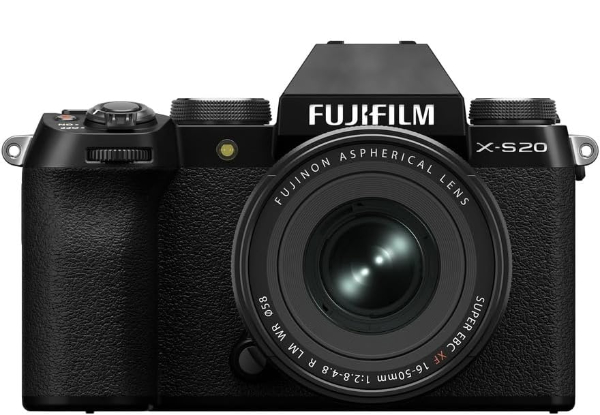
The Fujifilm X-S20 is the "Prosumer" choice for creators who also care about photography. While Sony focuses on clinical accuracy, Fujifilm is famous for its "Film Simulations." Why It Matters: These are color profiles built into the camera that mimic classic film stocks like Velvia or Eterna. For a creator, this means you can get a "cinematic" look directly in the camera without having to spend hours color-grading your footage on a computer. It effectively removes the "editing complexity" friction point.
On a technical level, the X-S20 is a powerhouse, offering 6.2K "Open Gate" recording. This means the camera records using the entire surface of the sensor. This is incredibly useful for modern social media because you can crop a vertical video for TikTok and a horizontal video for YouTube from the same high-resolution file without losing sharpness. It also features one of the best batteries in its class (NP-W235), lasting significantly longer than the compact Sony options.
The limitation for some will be the size and the ecosystem. It is an APS-C camera, meaning it’s larger than the ZV-1 or the Pocket 3. You will also need to invest in Fujifilm X-mount lenses, which are high-quality but can be an "expensive setup" compared to all-in-one compacts. It’s the right choice for the creator who wants their vlog to look like a movie.
Most cameras record a 16:9 slice of the sensor. Open Gate records the full 3:2 ratio. Why It Matters: It gives you "extra" image at the top and bottom. When you go to edit, you have the flexibility to move the frame up or down, or cut vertical 9:16 clips for Reels without having to zoom in and lose resolution.
Best Value Interchangeable: Sony ZV-E10 II
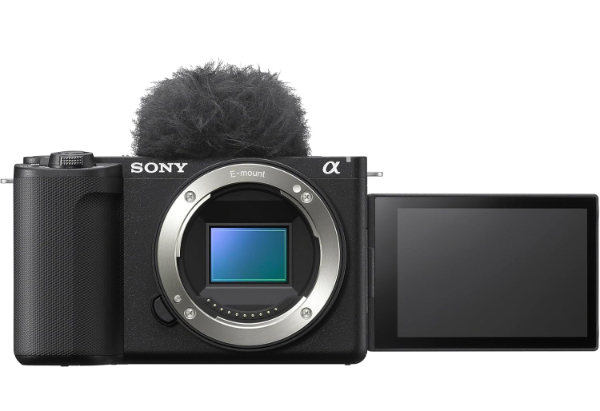
The Sony ZV-E10 II is the successor to the most popular vlogging camera ever made. It uses a 26-megapixel APS-C sensor, which provides a middle ground between the tiny compacts and the massive full-frame ZV-E1. Why It Matters: This sensor size allows for "Interchangeable Lenses." You can put on a wide-angle lens for vlogging today and a telephoto lens for a cinematic B-roll shot tomorrow. It grows with you as your skills improve, preventing the "need to upgrade" friction point later on.
The "II" model introduces a huge technical upgrade: the Z-series battery. This provides nearly double the recording time of the original ZV-E10. It also inherits the menu system from Sony's professional cinema cameras, which is much more intuitive for touchscreens. The autofocus remains industry-leading, with "Real-time Eye AF" that locks onto your eye and never lets go, even if you are wearing glasses or moving quickly through a crowd.
The honest limitation is the lack of "Mechanical IBIS." The camera does not have a floating sensor to stop shakes; it uses "Active" electronic stabilization. This means that if you want perfectly smooth walking shots, you will still likely want to use a small tripod handle or a gimbal. However, at this price point, the image quality and lens flexibility make it the most logical "first real camera" for any aspiring creator.
The ZV-E10 II captures 5.6K worth of data and "shrinks" it down to 4K. Why It Matters: This is called "Oversampling." Instead of just recording 4K directly, it uses the extra detail to create a sharper, cleaner image with less digital noise and fewer "jaggies" on fine details like hair or jewelry.
How We Chose These Products
Our evaluation process for vlogging cameras is centered on "Real World Friction." We didn't just look at who has the most megapixels (which is often a vanity metric for video). Instead, we tested for three critical factors: 1) Autofocus Tenacity, specifically how well the camera stays on a human eye when subjects move; 2) Thermal Reliability, ensuring the camera won't shut down in the middle of an important story; and 3) Audio Flexibility, looking at both internal mic quality and the ease of adding external gear. We selected these five because they represent the "Best in Class" for five distinct types of creators, from the pocket-traveler to the high-end cinematic pro.
Comparison Overview
| Model | Sensor Size | Max Resolution | Stabilization | Best For |
|---|---|---|---|---|
| Sony ZV-E1 | Full-Frame | 4K 120p | Mechanical + AI | Ultimate Quality |
| DJI Pocket 3 | 1-Inch | 4K 120p | 3-Axis Gimbal | Action & Travel |
| Sony ZV-1 II | 1-Inch | 4K 30p | Electronic | Pocket Simplicity |
| Fujifilm X-S20 | APS-C | 6.2K Open Gate | Mechanical (IBIS) | Hybrid Photo/Video |
| Sony ZV-E10 II | APS-C | 4K 60p | Electronic | Value & Lenses |
Buying Guide: What to Look For
- Sensor Size: A larger sensor (Full-Frame > APS-C > 1-inch) gathers more light and creates more natural background blur. If you film mostly at night, prioritize the sensor size.
- Autofocus (AF): Look for "Phase Detection" AF. It is much faster and more reliable than older "Contrast" systems, which often cause the camera to "hunt" or pulse back and forth.
- Flip Screen: For vlogging, a "fully articulating" screen that flips out to the side is non-negotiable. It allows you to see your framing and audio levels while you are in front of the lens.
- Bitrate and Color: 10-bit recording is preferred if you plan to edit your colors. If you want to post directly to social media with no editing, look for cameras with good "Color Science" like Fujifilm or Sony's S-Cinetone.
General Pro / Cons
| Pros |
|---|
| Dedicated sensors produce much better low-light video than phones. |
| Physical stabilization (Gimbals/IBIS) makes footage look professional. |
| Subject tracking ensures your face is always in sharp focus. |
| Interchangeable lenses allow for creative "looks" (blurred backgrounds). |
| Better microphones and dedicated mic ports for clear audio. |
| Longer battery life and physical buttons for tactile control. |
| No "AI sharpening" artifacts that make smartphone video look fake. |
| Cons |
|---|
| Higher initial cost and potential need for extra lenses/gear. |
| Increased weight and bulk compared to a smartphone. |
| Thermal limits can cause shutdowns during long, continuous clips. |
| Steeper learning curve for advanced settings (Log, Bitrates). |
| File sizes are much larger, requiring faster, more expensive SD cards. |
| No instant "share to Instagram" button; requires file transfer. |
| External mics are often still necessary for professional results. |
Final Summary
The transition to a dedicated vlogging camera is about moving from "capturing a moment" to "creating a story." For most, the Sony ZV-E10 II offers the most balanced path forward, providing pro-level lens flexibility at a reasonable price. If your life is active and you need the smoothest possible footage without a bulky setup, the DJI Osmo Pocket 3 is a mechanical marvel that fits in a pocket. Ultimately, the best camera is the one that removes your specific "friction points," whether that’s shaky video, poor audio, or the technical struggle of solo filming.
Aggregate rating of the products reviewed: 4.7 out of 5.