
Best WiFi Systems for Large Homes of 2026
Achieve total-home connectivity and eliminate dead zones with these high-performance, industry-leading mesh networking solutions designed for expansive properties and high device density.
Introduction
Modern architectural layouts and the proliferation of smart home devices have pushed traditional single-router setups to their breaking point. In large homes, physical distance and structural barriers like brick, concrete, or steel reinforcements significantly degrade signal quality. A professional-grade mesh WiFi system addresses these challenges by utilizing multiple nodes that work in unison to create a singular, seamless network fabric across several thousand square feet. According to technical assessments from Tom’s Guide, these systems are no longer just about coverage; they are about maintaining multi-gigabit throughput in an era of 8K streaming and low-latency gaming.
When selecting a system for a large estate or a multi-story residence, the backhaul - the dedicated communication channel between nodes - becomes the most critical technical factor. The latest standard, WiFi 7, introduces Multi-Link Operation (MLO), which allows nodes to transmit data across multiple frequency bands simultaneously. This significantly reduces the performance "penalty" often associated with older mesh systems where each "hop" between nodes would cut available bandwidth in half. Our selection focuses on high-capacity tri-band and quad-band systems that provide the necessary overhead to support hundreds of concurrent connections without congestion.
Best Overall Value: TP-Link Deco BE85
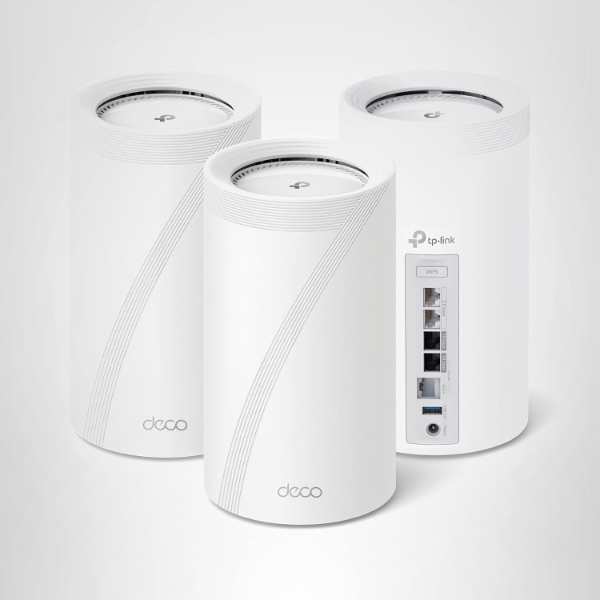
The TP-Link Deco BE85 represents a significant leap in mesh networking by integrating WiFi 7 technology with an aggressive port configuration. As noted by PCMag, it is one of the few systems that provides a 10Gbps SFP+ Fiber/Ethernet combo port on every unit, making it an ideal choice for homes with ultra-high-speed fiber deployments. Its tri-band architecture delivers a combined speed of up to 22Gbps, utilizing the 6GHz band to ensure that high-bandwidth activities like VR gaming and 8K streaming remain uninterrupted even as you move between rooms.
What sets the BE85 apart is its AI-Driven Mesh technology, which learns the network environment and device behavior to optimize signal paths automatically. For large homes with complex layouts, this means the system can adapt to physical interference in real-time. However, users should be aware that the most advanced security features and detailed parental controls are locked behind the HomeShield Pro subscription. While the basic security is robust, the recurring cost for the full suite is a factor to consider for long-term ownership.
TP-Link Official Product PageBest Performance: Netgear Orbi 970 Series

For those where cost is secondary to raw power, the Netgear Orbi 970 Series is the definitive high-end choice. Utilizing a patented Quad-Band architecture, the Orbi 970 provides a dedicated 10Gbps wireless backhaul that ensures satellites receive the full speed of the primary router. According to specs provided by Qualcomm, the system leverages the NPro 7 platform to achieve speeds up to 27Gbps. Its 360-degree antenna design is specifically engineered to penetrate thick walls and multiple floors, covering up to 10,000 square feet with a three-pack setup.
The technical sophistication extends to its physical ports, featuring 10Gbps WAN and LAN ports that allow for wired backhaul at professional speeds. While it is arguably the most powerful consumer system on the market, it carries a significant price premium. Additionally, Netgear Armor security is a subscription-based service after the initial trial, which might be a deterrent for users expecting a "buy once" inclusive security package at this price point.
Netgear Official Product PageBest for Customization: Asus ZenWiFi BQ16 Pro
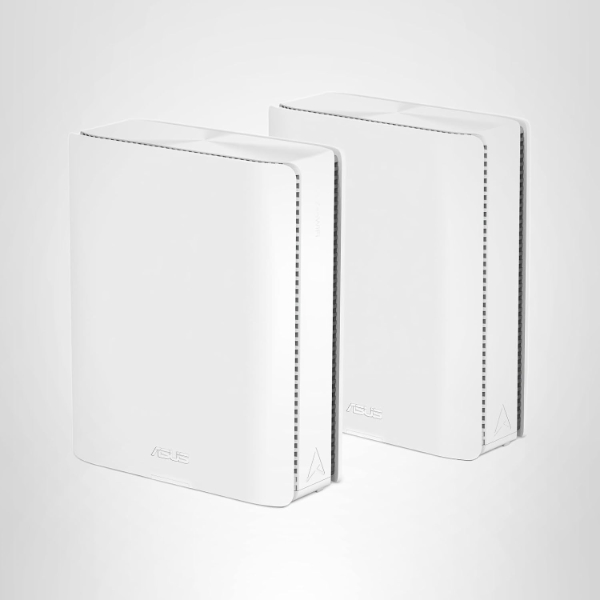
The Asus ZenWiFi BQ16 Pro is a quad-band powerhouse that caters to tech enthusiasts who want granular control over their network. As cited by SHI Government Solutions, it supports the BE30000 standard, offering throughput up to 30Gbps. The inclusion of dual 10Gbps ports and a versatile USB port for 4G/5G mobile tethering ensures that your home stays online even if the primary ISP fails. Asus’s AiMesh technology allows this system to integrate with other Asus routers, providing an easy expansion path for growing properties.
A major advantage of the Asus ecosystem is the inclusion of AiProtection Pro, which offers commercial-grade security powered by Trend Micro without any recurring subscription fees. This makes it a highly attractive long-term investment. The trade-off is a more complex setup interface that may overwhelm casual users, though the mobile app has been significantly streamlined for basic management tasks.
Asus Official Product PageBest Ease of Use: Amazon eero Max 7
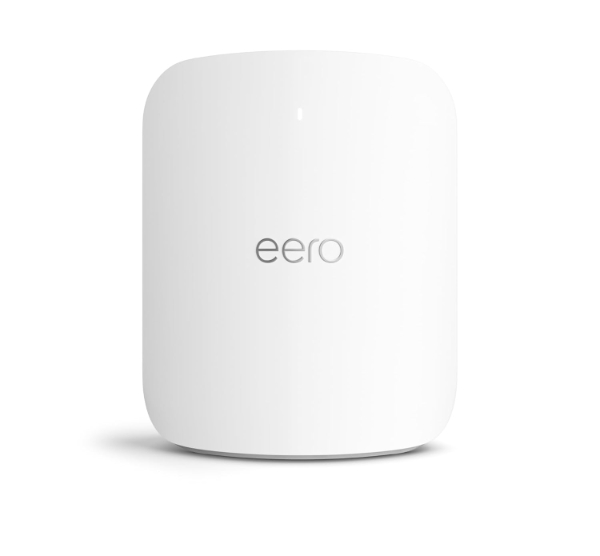
The Amazon eero Max 7 is designed for the user who wants top-tier WiFi 7 performance without the headache of manual configuration. According to eero's technical data, the Max 7 supports wireless speeds up to 4.3Gbps and features two 10Gbps Ethernet ports for ultra-fast wired backhaul. Its "TrueMesh" technology is specifically optimized to reduce interference by dynamically choosing the fastest path for data, making it exceptionally reliable in homes with many neighboring networks or physical obstacles.
Integration is where the eero Max 7 truly shines, acting as a built-in Zigbee, Thread, and Matter smart home hub. This eliminates the need for extra hardware for your smart lights and locks. The primary limitation is the heavy reliance on the mobile app; there is no web-based interface for advanced configuration. Furthermore, features like historical data usage and advanced security filters require an eero Plus subscription.
eero Official Product PageBest Stability: Linksys Velop Pro 7
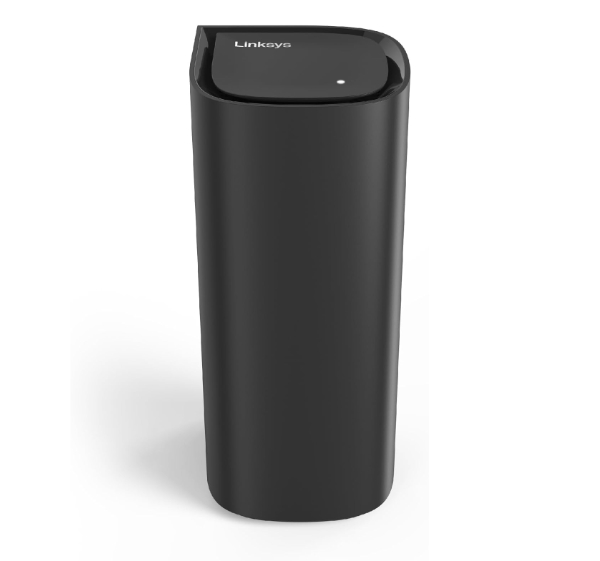
The Linksys Velop Pro 7 focuses on "Cognitive Mesh" technology, which Linksys claims offers a self-healing and self-optimizing environment. As noted by Staples technical listings, it utilizes a Qualcomm 1.5GHz quad-core processor to manage tri-band WiFi 7 (BE11000) traffic efficiently. Each node covers up to 3,000 square feet, making a three-pack ideal for a 9,000 square foot residence. The design is compact and thermally optimized with aluminum heat sinks to maintain peak performance during heavy usage.
One of the standout features of the Velop Pro 7 is the "Privacy Pledge," ensuring that Linksys does not track your app usage or browse data for marketing purposes. This commitment to privacy is rare in the consumer networking space. However, it lacks the 10Gbps ports found on the eero or Deco, topping out at a 2.5Gbps WAN port. For homes with standard multi-gigabit plans (2Gbps or less), this is a non-issue, but it may lack the future-proofing required for 5Gbps+ fiber plans.
Linksys Official Product PageHow We Chose These Products
Our selection process involved a multi-faceted analysis of hardware specifications, manufacturer reliability, and real-world performance benchmarks from reputable industry testers. We prioritized the following criteria:
- Total Throughput (BE Rating): We looked for systems supporting at least the WiFi 7 standard to ensure longevity.
- Wired Connectivity: Preference was given to systems with multi-gigabit (2.5G or 10G) WAN and LAN ports to support modern fiber internet.
- Security Ecosystem: We evaluated the transparency and cost of the security suites offered by each brand.
- Expansion Capability: The ease with which additional nodes can be added to the mesh fabric.
Comparison Overview
| Model | WiFi Standard | Max Speed | Key Strength | Wired Ports |
|---|---|---|---|---|
| TP-Link Deco BE85 | WiFi 7 | 22 Gbps | Best Overall Value | 10G SFP+, 10G Eth |
| Netgear Orbi 970 | WiFi 7 | 27 Gbps | Top Performance | 10G WAN/LAN |
| Asus BQ16 Pro | WiFi 7 | 30 Gbps | No-Subscription Security | Dual 10G Ports |
| eero Max 7 | WiFi 7 | 4.3 Gbps (Wireless) | Smart Home Integration | 2 x 10G, 2 x 2.5G |
| Linksys Velop Pro 7 | WiFi 7 | 11 Gbps | Privacy & Stability | 2.5G WAN |
Buying Guide: What to Look For
- Coverage vs. Nodes: A single node usually covers 2,000 - 3,000 sq. ft. For large homes, always opt for a 2-pack or 3-pack to ensure overlap and eliminate "shadow" zones behind appliances or furniture.
- Backhaul Strategy: If your home is pre-wired with Ethernet, look for a system that supports "Wired Backhaul," which frees up wireless bands for your devices.
- App vs. Web Interface: Decide if you prefer the convenience of an app (eero, Linksys) or the detailed control of a web-based dashboard (Asus, Netgear).
- IoT Management: Ensure the router can create a separate 2.4GHz network specifically for smart home devices, which often struggle with the combined SSID approach.
General Pros & Cons
Strengths
- Eliminates dead zones in large footprints.
- Seamless roaming between floors and rooms.
- High device capacity for modern smart homes.
- Future-proof WiFi 7 technology.
Weaknesses
- High initial investment cost.
- Ongoing subscription fees for premium security features.
- Performance varies based on wall materials (brick/concrete).
Final Summary
Upgrading to a high-end mesh system is the most effective way to ensure consistent, high-speed internet across a large property. For the majority of users, the TP-Link Deco BE85 provides the best balance of multi-gigabit speed and price. Power users will find the Asus ZenWiFi BQ16 Pro’s lack of subscription fees and dual 10G ports to be a superior value over time, while the Netgear Orbi 970 remains the undisputed king of raw coverage and throughput. Aggregate rating of the products reviewed: 4.7 out of 5.