
Best Yoga and Pilates Gear: Technical Comparison of Professional-Grade Equipment of 2026
An authoritative analysis of material science, mechanical resistance, and ergonomic engineering in modern yoga and pilates hardware.
Introduction
The landscape of yoga and pilates equipment has evolved from simple accessories into highly engineered tools designed to optimize biomechanical alignment and resistance loading. Unlike standard fitness equipment, yoga and pilates gear requires a unique balance of high-friction surfaces, structural rigidity, and material safety. Professionals must consider variables such as the coefficient of friction (grip), Shore durometer ratings (cushioning), and the tensile strength of webbing and springs to ensure both safety and performance longevity.
In this technical guide, we evaluate five core products that define the current standard for professional practice. We move beyond aesthetic considerations to analyze the material science behind closed-cell PVC, the physics of spring-loaded resistance, and the sustainability of natural cork. These selections represent the peak of manufacturing standards, utilized by clinical instructors and professional studios worldwide to facilitate high-precision movement patterns and progressive load management.
Best for Durability: Manduka PRO Yoga Mat
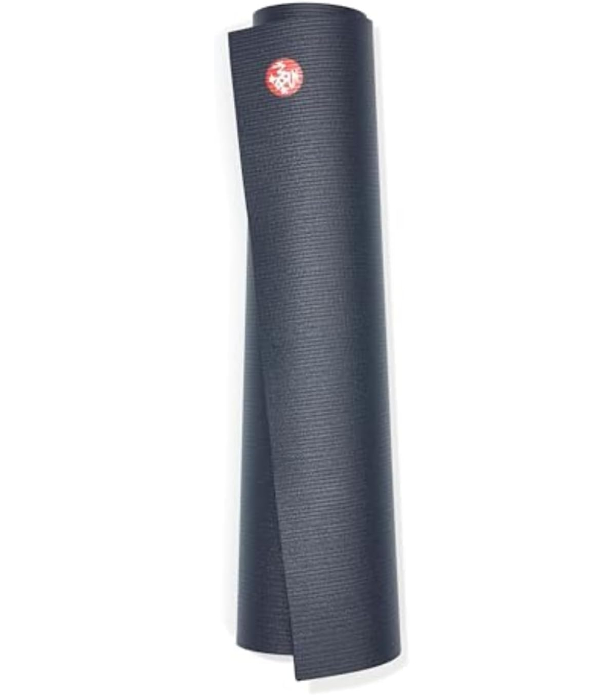
The Manduka PRO is an ultra-dense, 6mm thick mat engineered using a proprietary closed-cell PVC. Unlike open-cell natural rubber mats that absorb moisture and harbor bacteria, the PRO’s closed-cell surface prevents perspiration from seeping into the core. This makes it an ideal choice for high-intensity practices or hot yoga, where hygiene and longevity are paramount. The material density provides exceptional joint protection on hard surfaces, effectively dampening impact without the "bottoming out" effect common in TPE-based mats.
From a performance standpoint, the Manduka PRO features a dot-pattern bottom to prevent lateral shearing during dynamic transitions. The top surface is designed with a "fabric-like" finish that actually improves in grip over time as the superficial film wears down - a process known as "breaking in" the mat. This mechanical aging ensures that the mat reaches its peak coefficient of static friction after several weeks of use, providing a stable foundation for advanced inversions and balance postures.
The primary limitation is the weight; at approximately 7.5 pounds, it is not optimized for daily commuting without a dedicated carrying system. Additionally, the break-in period requires patience, often involving a salt-scrub treatment to accelerate the removal of the factory coating. However, given its lifetime guarantee and resistance to peeling or fading, it remains the gold standard for dedicated practitioners seeking a permanent studio solution.
The PRO mat utilizes a high-density PVC that undergoes a specialized emission-free manufacturing process. By maintaining a closed-cell molecular structure, the mat achieves a high Shore A durometer rating, which measures the hardness of the elastomer. This structural integrity prevents compression set - the permanent deformation of the material under load - ensuring the 6mm loft remains consistent for decades.
Best Professional Reformer: Balanced Body Allegro 2 Reformer
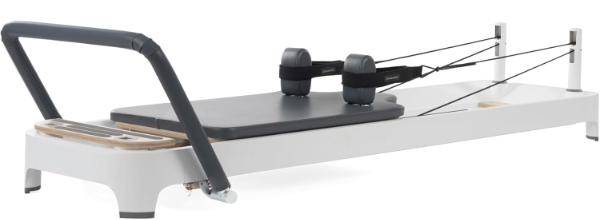
The Balanced Body Allegro 2 is the most versatile pilates reformer on the market, distinguished by its EasySet Footbar and SoftTouch rope system. The frame is constructed from powder-coated anodized aluminum, providing a rigid chassis that eliminates flex during high-load exercises. The carriage glide system utilizes custom-built precision bearings and high-durometer wheels to ensure a near-silent, frictionless movement, which is critical for the tactile feedback required in eccentric muscle control.
The engineering of the spring system is where the Allegro 2 excels. It features a five-spring kit with color-coded resistance levels, allowing for precise incremental loading. The carbon steel springs are nickel-plated for corrosion resistance and calibrated to maintain a linear k-factor (spring constant) throughout their extension. This predictability is essential for instructors who need to prescribe specific resistance loads for clinical rehabilitation or advanced athletic conditioning.
While the Allegro 2 is designed for studio use, its stackable footprint and optional leg kit make it viable for home use; however, it requires significant floor space (94 inches in length). The ecosystem is highly expandable, allowing for the addition of towers, jumpboards, and boxes, but these components are proprietary and represent a secondary investment. For those seeking the highest level of mechanical precision in pilates, the Allegro 2 is the industry benchmark.
The springs on the Allegro 2 follow a strict linear progression defined by F = kx, where F is force, k is the spring constant, and x is displacement. Balanced Body ensures that their springs are manufactured with a consistent wire diameter and coil count, preventing the non-linear "snapping" or "dead spots" common in lower-tier hardware, which can compromise the integrity of the pilates movement.
Best Support and Sustainability: Manduka Cork Yoga Block
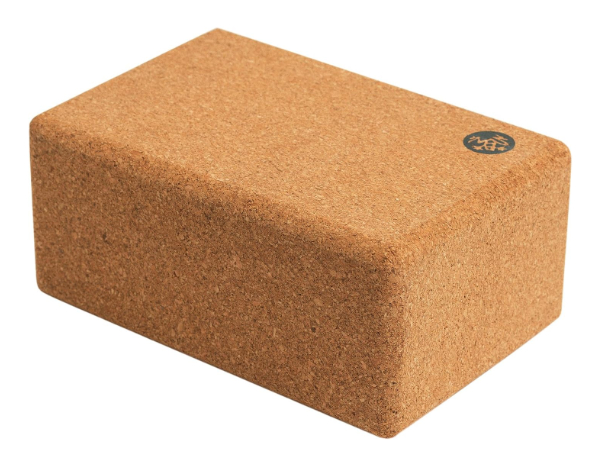
The Manduka Cork Yoga Block is a high-density support tool that utilizes sustainable, fine-grain cork. Unlike foam blocks, which have a high degree of "squish" or deformation under load, cork provides a rigid, non-slip surface that is essential for grounding in advanced poses like Tolasana or Ardha Chandrasana. The mass of the block - weighing approximately 2 lbs - adds a level of stability that prevents the block from tipping during weight-bearing transitions.
Cork is naturally antimicrobial due to the presence of suberin, a waxy substance that repels moisture and prevents the growth of fungi. This makes it a superior material choice for studio environments where multiple practitioners handle the equipment. The edges are radiused to provide an ergonomic grip, reducing pressure on the carpal bones during wrist-heavy support maneuvers. The tactile feedback of cork is unique; it provides a high-friction surface even when exposed to light perspiration.
The downside of cork is its weight relative to EVA foam, making it less ideal for travelers. It also lacks the "softness" that beginners might prefer for restorative postures where the block is used under the sacrum. However, for serious practitioners who require unyielding support and environmental responsibility, this block is the preferred choice over synthetic alternatives.
Manduka uses a specific granular size of cork to achieve a density that exceeds 350 kg per cubic meter. This high density ensures a superior compressive strength-to-weight ratio. Under the vertical load of a human torso, the cork cells (which are air-filled 14-sided polyhedrons) act as micro-shocks that provide microscopic give while maintaining macroscopic rigidity.
Best for Resistance: Balanced Body Ultra-Fit Circle
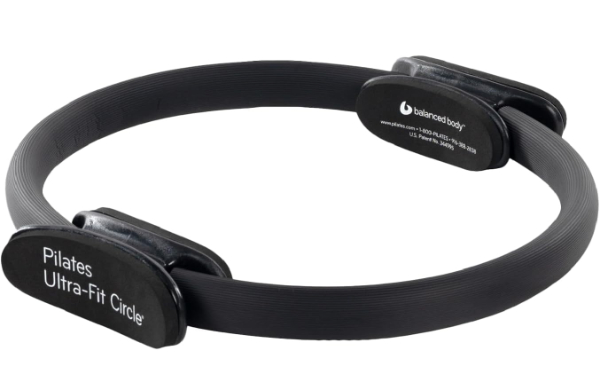
The Ultra-Fit Circle is a modern iteration of the original "Magic Circle" designed by Joseph Pilates. It is constructed from a flexible, high-tensile plastic composite that provides consistent resistance when compressed. Unlike fiberglass rings, which can splinter over time, or metal rings that can lose their shape through elastic hysteresis, the Ultra-Fit Circle is engineered to return to its original concentric form even after thousands of repetitions.
The ring features dual-padded handles, both on the interior and exterior circumferences, allowing for both adduction (inner thigh/chest) and abduction (outer hip/shoulder) exercises. The padding is made from non-porous EVA foam, which resists moisture absorption and provides a comfortable contact point for the shins or palms. The 15-inch diameter is the standard for adult users, providing a biomechanically sound range of motion for most core and extremity routines.
The only significant limitation is that the resistance is fixed; users cannot "dial-up" the tension as they would with a reformer spring. Consequently, advanced practitioners may eventually find the resistance ceiling to be a limiting factor for specific strength-based protocols. For general core engagement and proprioceptive feedback, however, its reliability and safety profile are unmatched.
The composite material in the Ultra-Fit Circle is selected for its high fatigue limit. In engineering terms, this means the material can undergo millions of stress cycles without developing micro-fractures. The polymer chains are cross-linked to provide a high modulus of elasticity, ensuring the resistance remains "springy" rather than "plastic" during use.
Best for Flexibility Support: Hugger Mugger D-Ring Yoga Strap
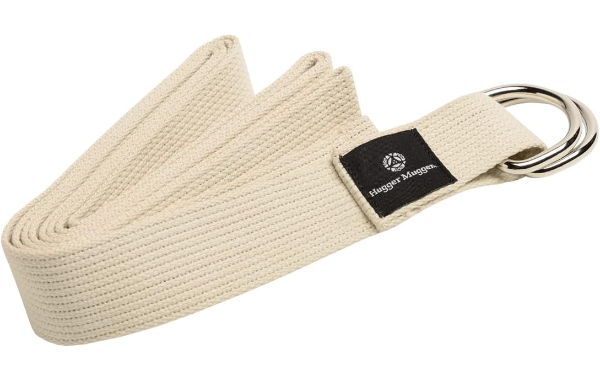
The Hugger Mugger D-Ring strap is an essential tool for bridge-building in flexibility and alignment work. It is woven from high-quality 100% cotton with a dense webbing pattern that prevents the strap from digging into the skin while maintaining zero-stretch under high tension. The strap uses a heavy-duty metal D-ring buckle, which is far superior to plastic cinch buckles that can slip or fail when significant force is applied in poses like Supta Padangusthasana.
A key technical advantage of this strap is its tensile strength. The cotton webbing is thick enough to provide a secure grip without causing hand fatigue, yet thin enough to slide easily through the buckle for quick adjustments. With an 8-foot or 10-foot option, it accommodates practitioners of all heights, allowing for the creation of large loops that can encompass the torso and feet simultaneously to facilitate deep passive stretching.
The trade-off for the metal buckle is the potential for noise when it hits a hardwood floor and the slight weight increase compared to nylon alternatives. Additionally, the cotton will absorb sweat, requiring occasional laundering; however, the material is pre-shrunk to ensure the buckle remains compatible with the webbing width. For professional use, the safety of a non-slip metal buckle is an absolute requirement.
The strap utilizes a "basket-weave" cotton pattern designed to maximize the friction surface between the webbing and the metal D-ring. When the strap is pulled taut, the D-ring creates a mechanical lock. The cotton fibers have a high natural coefficient of friction against steel, ensuring that even under 200+ lbs of tension, the strap remains locked in place without manual tightening.
How We Chose These Products
Our selection process involves a multi-dimensional analysis of equipment performance. We prioritize structural integrity (the ability to withstand repeated loading), material safety (OEKO-TEX certification and low VOC emissions), and biomechanical utility. Each product was evaluated for its ability to provide consistent feedback to the user, a critical factor in proprioceptive development during yoga and pilates. Furthermore, we only selected products with established manufacturer reputations for quality control and long-term hardware support.
Comparison Overview
| Product | Core Material | Primary Benefit | Weight/Size | Durability Rating |
|---|---|---|---|---|
| Manduka PRO Mat | Closed-Cell PVC | Joint Support / Hygiene | 7.5 lbs / 6mm thick | Exceptional (Lifetime) |
| Allegro 2 Reformer | Anodized Aluminum | Precision Resistance | 133 lbs / 94" L | Commercial-Grade |
| Manduka Cork Block | Sustainable Cork | Rigid Support | ~2 lbs / 9x6x4" | High (Antimicrobial) |
| Ultra-Fit Circle | Composite Polymer | Targeted Resistance | ~1 lb / 15" D | Very High |
| HM D-Ring Strap | 100% Cotton / Steel | Flexibility Range | 8 ft / 10 ft | High (Washable) |
Buying Guide: What to Look For
- Coefficient of Friction: In yoga, "grip" is a measure of both static and dynamic friction. Look for mats that provide high traction even when moisture is introduced.
- Shore Durometer: This measures material hardness. A higher durometer (like cork or dense PVC) provides stability, while a lower durometer (foam) provides comfort. Balance these based on your joint sensitivity.
- Mechanical Linear Resistance: In pilates reformers, the quality of the spring k-factor determines the smoothness of the load. Carbon steel is preferred over lower-cost alloys.
- Material Porosity: Closed-cell materials are essential for studio-shared gear to prevent the absorption of sweat and biological contaminants.
- Hardware Materials: Prefer stainless steel or anodized aluminum over plastic components for any weight-bearing adjustments (buckles, footbars, clips).
General Pro / Cons
| General Category Strengths |
|---|
| High-density materials prevent joint injury. |
| Anodized frames offer superior corrosion resistance. |
| Closed-cell structures inhibit bacterial growth. |
| Proprietary composites maintain elastic memory. |
| Natural cork provides eco-friendly antimicrobial surfaces. |
| Linear spring tension provides predictable load profiles. |
| Metal hardware prevents mechanical failure under tension. |
| Professional gear offers significantly higher resale value. |
| General Category Weaknesses |
|---|
| Higher initial capital investment for quality hardware. |
| Professional mats are significantly heavier for transport. |
| Break-in periods required for optimal friction surfaces. |
| Proprietary ecosystems limit third-party accessory use. |
| Large footprints (reformers) require dedicated room space. |
| Natural materials (cork/cotton) require specific cleaning. |
| Springs require replacement every 2 years in commercial settings. |
| High-tensile composite rings have a maximum resistance ceiling. |
Final Summary
Investing in professional-grade yoga and pilates gear is a prerequisite for any practitioner serious about biomechanical safety and progressive conditioning. The Manduka PRO and Balanced Body Allegro 2 represent the architectural foundations of a high-performance practice, offering durability and precision that low-cost alternatives cannot replicate. While the upfront costs and weight of these products are higher, their lifespan and mechanical reliability provide a superior return on investment. By selecting tools based on material density and mechanical k-factors, practitioners can ensure their equipment supports, rather than hinders, their physical development.
Aggregate rating of the products reviewed: 4.8 out of 5.